Including Online and Telephone Working
Certificate in Clinical Supervision
Become a Skilled, Ethical & Confident Clinical Supervisor with the tools and knowledge to supervise effectively across all platforms.
If you’re interested in becoming a Supervisor, have a look at our Certificate in Clinical Supervision Including Online and Telephone Working.

Become a Skilled, Ethical & Confident Clinical Supervisor with the tools and knowledge to supervise effectively across all platforms.
Counselling supervision plays a critical role in maintaining the professional development, ethical integrity, and overall effectiveness of counsellors and psychotherapists. Drawing from Michael Carroll’s in-depth research, this blog explores the seven essential tasks of supervision and their practical implications for supervisors. By understanding these tasks, supervisors can refine their approach to better support supervisees and enhance the quality of client care.
The Seven Essential Tasks of Counselling Supervision
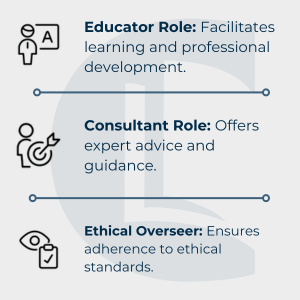
Counselling supervision is a structured relationship that encourages growth, ensures accountability, and safeguards ethical standards. Michael Carroll’s landmark study identified seven distinct but interconnected tasks that form the foundation of effective supervision. These tasks provide a roadmap for supervisors to balance their roles as educators, consultants, and ethical overseers.
Carroll’s research highlights several actionable takeaways for supervisors to strengthen their practice in counselling supervision:
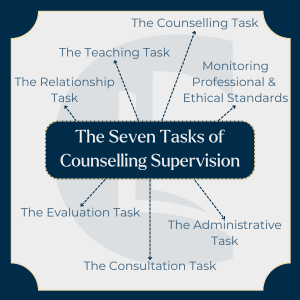
Supervision is a dynamic and collaborative process encompassing various roles and responsibilities. Michael Carroll identified seven key tasks supervisors undertake to support supervisees in their professional development and ethical practice. These tasks reflect the diverse aspects of supervision, from creating strong relationships to navigating complex client cases. Let’s explore these tasks in detail to understand how they contribute to effective and meaningful supervision.
The relationship between supervisor and supervisee is the foundation for all supervision tasks. It must be carefully contracted and boundaried to create an atmosphere of safety, support, and constructive challenge.
Effective supervision also requires an acute awareness of transference, countertransference, and parallel processes, which can mirror dynamics in the supervisee-client relationship. Carroll emphasised that the relationship evolves, particularly as the supervisee’s internal supervisor develops. Flexibility in roles is essential, allowing supervisors to adapt to the supervisee’s changing needs while maintaining a professional and supportive dynamic.

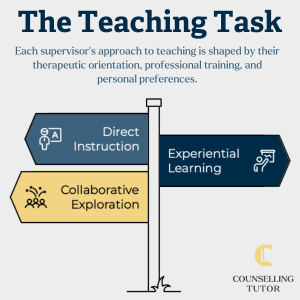
Supervisors play a formative educational role, helping supervisees develop their skills and knowledge base. Carroll observed that each supervisor’s approach to teaching is shaped by their therapeutic orientation, professional training, and personal preferences.
Educational strategies can range from direct instruction to experiential learning and collaborative exploration. These methods should be tailored to the supervisee’s developmental stage and learning readiness. Carroll’s findings also highlight that supervisors’ chosen methods may sometimes reflect their biases or limitations, underscoring the need for self-awareness and adaptability in this task.
Although supervision is distinct from personal therapy, supervisees’ issues often influence their professional practice. Supervisors must navigate this intersection judiciously, offering a space to explore how personal challenges may impact client work.
Carroll’s research found that supervisors take various approaches to allocating time to address supervisees’ issues. Some may encourage supervisees to seek external therapy, while others might dedicate limited time within supervision to this. They always prioritise the supervisee’s professional growth and client welfare.
Maintaining ethical standards is a cornerstone of effective supervision. Supervisors review how supervisees implement ethical principles, ensuring client safety and professional integrity. Carroll found that supervisors expect training programmes to instil ethical standards in trainees, while their role involves monitoring and reinforcing these standards.
Challenges arise when supervisees deviate from ethical behaviour, requiring supervisors to intervene delicately but firmly. Options include raising concerns within supervision, escalating to training providers, or, in extreme cases, discontinuing the supervisory relationship.
Evaluation is integral to supervision, encompassing ongoing feedback and formal assessments. Carroll’s study highlighted that supervisors’ evaluation methods vary significantly, ranging from structured criteria to a more intuitive sense of supervisee competence.
Audio-recorded sessions often influence evaluation, particularly in humanistic modalities, though they may be seen as intrusive in psychodynamic approaches.
The quality of the supervisory relationship heavily influences how evaluation is delivered and received. Supervisors must cultivate a safe, non-judgmental space where supervisees feel confident sharing their challenges and achievements, enabling genuine growth.
The consultation task becomes increasingly significant as supervisees progress from training into independent practice. Supervisors adopt a systemic perspective, examining the client and supervisee and the relational dynamics within the supervisory process. Carroll highlighted that consultation often serves as a trigger for integrating other tasks, such as addressing ethical concerns or refining therapeutic strategies.
By exploring these interconnected systems, supervisors can provide nuanced guidance tailored to the supervisee’s specific context and developmental needs, ensuring a holistic and impactful supervision process.
Though sometimes underestimated, administrative responsibilities are essential for ensuring the smooth functioning of supervision and supporting effective client services. Carroll found that the extent of a supervisor’s administrative involvement depends on whether it is internal or external to the supervisee’s agency.
Internal supervisors often have direct access to organisational systems and can advocate for changes that benefit client care. External supervisors may be more hands-off and encourage supervisees to navigate agency systems independently. Supervisors must be prepared to intervene in extreme situations where administrative challenges compromise client welfare.

The Seven Essential Tasks of Counselling Supervision
The seven essential tasks of counselling supervision are the relationship task, the teaching task, the counselling task, monitoring professional and ethical standards, the evaluation task, the consultation task and the administrative task — a framework supervisors use to support supervisee development and safe, ethical practice.
The supervisory relationship is the foundation of effective supervision because it creates a safe, supportive space where the supervisee can reflect, learn and be constructively challenged while maintaining professional boundaries.
Supervision ensures ethical practice by monitoring and reviewing how supervisees apply ethical principles, intervening when standards are not met and guiding supervisees to safeguard client welfare and professional integrity.

Carroll’s exploration of the seven supervision tasks provides a practical and insightful framework for enhancing supervisory practice. By embracing and integrating these tasks, supervisors can create a supportive and reflective environment that nurtures supervisees’ professional growth, prioritises client welfare, and upholds the counselling profession’s ethical standards.
This well-rounded approach empowers supervisors with a solid foundation for continuous improvement. It encourages thoughtful reflection on their supervisory methods and equips them to address the complexities of their role with confidence and adaptability. Thus, it ultimately contributes to the development of both supervisees and the wider therapeutic community.
Carroll, M. (1994). The Generic Tasks of Supervision: An Analysis of Supervisee Expectations, Supervisor Interviews and Supervisory Audio-Taped Sessions. PhD thesis, University of Surrey. Access the full study.
Transparency note
This article was written and reviewed by human contributors. AI was used as a supportive tool to assist with formatting, layout clarity, and language refinement. All content, interpretations, and ethical positions were created and checked by the authors.
Counselling Tutor provides trusted resources for counselling students and qualified practitioners. Our expert-led articles, study guides, and CPD resources are designed to support your growth, confidence, and professional development.
👉 Meet the team behind Counselling Tutor
Notice any broken link or issues with this resource? Kindly let us know by email
Email us