Including Online and Telephone Working
Certificate in Clinical Supervision
Become a Skilled, Ethical & Confident Clinical Supervisor with the tools and knowledge to supervise effectively across all platforms.
Supervision has always been central to safe counselling practice. The BACP Ethical Framework 2026, mandatory from midday on Tuesday 3 November 2026, keeps it at the heart of the profession but changes how the duty is written and what you have to be able to show.
For most practitioners, the day-to-day experience of supervision will not feel very different. You will still meet your supervisor regularly and reflect on your work. What is different is the standard your supervisor is measured against, what counts as genuine independence, and the way supervision now connects to the framework’s new expectation that you can explain your ethical reasoning.
This article compares the 2018 and 2026 wording on supervision, sets out four direct changes in point 4.3 and one wider implication, and explains why supervision now sits at the centre of accountable decision-making. It is written for supervisees and for practitioners thinking about training as supervisors. Where something is good practice rather than a framework rule, we say so.
By the end of this article, you will be able to:
This free guide explains the changes in plain English and turns them into seven quick checks to go through with your supervisor — so you know your arrangements are ready.
In the 2018 framework, supervision had its own section beginning at point 60. Points 60 to 66 contain the provisions most directly compared here (the purpose of supervision, its independence from line management, the expertise a supervisor needs, the modelling of good practice, confidentiality within supervision, the allocation of responsibility for clients, and trainee supervision), while points 67 to 73 add further duties concerning supervision.
The 2026 framework is more compressed. Supervision becomes one of the core responsibilities under “Deliver services to high professional standards”, at point 4.3: “Have adequate supervision that enables us to reflect in depth about all aspects of our practice.” Five sub-points sit beneath it, and other supervision duties are threaded through the framework, particularly in the new section on working ethically within relationships.
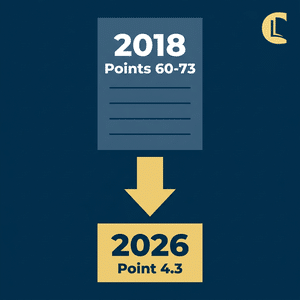
The underlying commitment has not changed. Supervision is still required, still central, and still about reflecting in depth on your practice. What has moved is the precision of the language and where the detail now lives. Much of the descriptive material from 2018 has shifted out of the framework itself and into BACP’s competence frameworks and Ethics in Practice resources.
The 2018 framework said supervisors needed “adequate levels of expertise acquired through training and/or experience”. That left the bar largely to professional judgement.
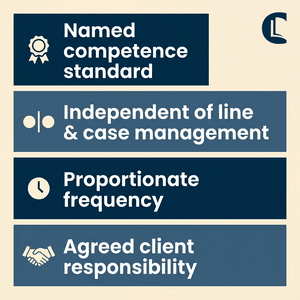
The 2026 framework is more specific. Point 4.3(a) asks you to confirm that your supervisor has the qualifications, experience and competence to supervise your work “in accordance with the BACP supervision competence framework”. The expectation now points to a named standard rather than a general sense of experience.
For supervisees, this is a prompt to check rather than assume. It is reasonable to ask a prospective supervisor about their supervision training and how it maps to BACP’s expectations.
For practitioners moving into supervision, it raises the value of structured, BACP-aligned supervision training. Counselling Tutor advertises its Certificate in Clinical Supervision (Including Online and Telephone Working) as mapped to the BACP supervision competence framework and as taught, observed and assessed at a level equivalent to Level 6. It is an example of training that may help develop relevant competence; it is not a BACP-mandated qualification and does not by itself guarantee compliance with point 4.3(a).

Become a Skilled, Ethical & Confident Clinical Supervisor with the tools and knowledge to supervise effectively across all platforms.
Independence has always mattered in supervision, because you cannot reflect honestly on your work if the person hearing it also manages your caseload or your employment. In 2018 the wording was that “a substantial part or preferably all of supervision needs to be independent of line management”.
The 2026 framework tightens this. Point 4.3(c) states plainly that supervision “is independent of line and case management”. Two things change. Case management is named alongside line management, and the softer “substantial part or preferably all” phrasing has gone.
This matters most in agency, charity and placement settings, where the person who allocates your cases may also be your supervisor. In these settings, check whether your arrangement provides genuinely independent clinical supervision, and seek clarification where the supervisory, case-management and line-management roles overlap.
The 2018 framework itself described supervision as “regular and ongoing” rather than setting a universal number of hours, though BACP membership and accreditation requirements have separately included specific supervision expectations for some categories of member. The 2026 framework connects supervision to your circumstances. Point 4.3(b) requires regular supervision “in accordance with BACP membership requirements, the practitioner’s level of experience, training and caseload”.
In practice this means there is no single figure that fits everyone. A newly qualified counsellor carrying a full caseload and a very experienced practitioner working part-time are not expected to need the same amount. BACP’s membership requirements, which vary by membership category, remain the baseline, and your experience, training and caseload shape what adequate supervision looks like on top of that.
The 2018 framework asked for “careful consideration” of how responsibilities for clients are allocated between supervisor, supervisee and any line manager, and said these arrangements should usually be reviewed at least once a year.
The 2026 framework makes this a clearer expectation. Point 4.3(e) requires “agreement with the supervisor about who holds key responsibilities for clients”. The move is from considering the question to reaching a shared agreement on it. The explicit annual-review wording has gone from the framework text, though reviewing the arrangement periodically remains sensible practice, particularly in placements and agency work where roles change.

The larger shift is not in point 4.3 at all. It is in how supervision now connects to the framework’s central structural change: the expectation that you can give a rationale for your ethical decisions.
The 2026 framework asks members to be able to explain the reasoning behind their ethical decisions, using a set of questions covering the ethical issues, who was involved, the internal and external factors, the decision reached and how it was reviewed. Supervision is named repeatedly as where this reasoning is developed and tested. The framework describes developing your rationale to “inform discussions with others, such as supervisors”, and lists discussing the issue with a supervisor among the steps of collaborative decision-making.
Two duties make this explicit. Under the responsibility to build appropriate relationships, point 1.4(c) requires that “we consult regularly with our supervisor about ethical dilemmas or challenges”. Under supervision itself, point 4.3(d) requires that “we collaborate with our supervisors on ethical dilemmas and challenges arising through our work”.
In 2018, supervision was where you could think through dilemmas. In 2026, consulting your supervisor on ethical challenges is a stated requirement, and supervision becomes part of how you evidence accountable practice. Supervision provides an important forum for testing that reasoning, consulting on dilemmas and identifying appropriate actions, alongside any organisational, contractual, insurance and regulatory requirements on records and consultation.

An encrypted vault for UK counsellors and psychotherapists. Write your session notes, keep client records, and manage appointments in one secure place. Built around UK GDPR and the ethical standards of the counselling profession, by the team behind Counselling Tutor.

Several things named in the 2018 supervision section are no longer spelled out in the framework text. The detail on supervisors modelling good practice, the standalone point on confidentiality within supervision, the explicit yearly review of responsibility arrangements, and the passage on trainee supervision and collaboration with placement providers do not appear as separate points in 2026.
This is not a signal that they no longer matter. The 2026 framework is deliberately shorter, and practitioners should read point 4.3 alongside the rest of the framework and BACP’s current supervision and competence resources. The absence of a separate sub-point should not be read as removing wider duties on confidentiality, safety, records or trainee support. If you supervise trainees or work in a placement, the specific wording of 2018 point 66 is not reproduced as a separate sub-point under 4.3; check the full 2026 framework, your training-provider arrangements and BACP’s current guidance before deciding how collaboration should operate.
This free guide explains the changes in plain English and turns them into seven quick checks to go through with your supervisor — so you know your arrangements are ready.
Not necessarily. The 2026 framework does not require every member to change supervisor, but it does require you to confirm that your supervisor has the qualifications, experience and competence expected under the BACP supervision competence framework. For most established supervisory relationships this is a check rather than a change; if an existing arrangement does not meet the requirement, discuss remedial steps or consider alternative supervision.
The framework does not set a single figure. It ties supervision to BACP membership requirements plus your experience, training and caseload. Check the requirements for your membership category and discuss the right amount with your supervisor.
Your clinical supervisor should not also be the person who manages your employment or allocates your caseload. This matters most in agency and placement settings. Where those roles overlap, arrange separate clinical supervision.
The framework points to the BACP supervision competence framework rather than one named qualification. Ask a prospective supervisor about their supervision training and how it meets BACP’s expectations.
It becomes mandatory from midday on Tuesday 3 November 2026. Until then, BACP members continue to work under the 2018 framework.
For most supervisees, the 2026 framework will not change the feel of supervision. You will still bring your work, reflect openly, and leave with a clearer head. What changes is the framing around it. Your supervisor is now measured against a named standard, independence is drawn more firmly, and the conversations you have about difficult decisions are part of how you show that your practice is accountable.
If you supervise, or are thinking about training to supervise, the direction of travel is clear. Supervision is being held to a defined competence standard, and demand for supervisors who can evidence that standard is likely to grow.
The information in this article reflects the BACP Ethical Framework 2026 as published and is correct at the time of publishing (September 2026). Professional body requirements change over time, so check the linked official BACP sources for the latest details before acting on them.
Transparency note
This article was written and reviewed by human contributors. AI was used as a supportive tool to assist with formatting, layout clarity, and language refinement. All content, interpretations, and ethical positions were created and checked by the authors.
Counselling Tutor provides trusted resources for counselling students and qualified practitioners. Our expert-led articles, study guides, and CPD resources are designed to support your growth, confidence, and professional development.
👉 Meet the team behind Counselling Tutor
Notice any broken link or issues with this resource? Kindly let us know by email
Email us