Trauma Informed Practice Course
The Competence and Confidence to Work with Trauma in Your Practice.
The following article is taken from our Trauma-Informed Practice course.

The Competence and Confidence to Work with Trauma in Your Practice.
Adverse Childhood Experiences (ACEs) are widely recognised as a critical factor in shaping individuals’ mental and physical health into adulthood. Defined as a set of ten specific traumatic experiences occurring before the age of 18, ACEs have been linked to long-term difficulties such as mental health disorders, risky behaviours, and socioeconomic challenges.
Emerging research, particularly from the U.S. Centers for Disease Control (CDC), emphasises the cumulative impact of these experiences and their profound influence on adult outcomes. In the UK, organisations such as the Early Intervention Foundation (EIF) are shedding light on the national relevance of ACEs and advocating for trauma-informed care across sectors.

This article explores the concept of ACEs, their long-lasting effects, and the relevance of these findings in therapeutic practice.
Childhood Experiences and Their Mental Health Impact
By the end of this article, readers will:
Adverse Childhood Experiences (ACEs) represent a spectrum of traumatic events occurring during childhood that can have lasting effects on mental and physical health. These experiences are broadly categorised into personal traumas and family-related adversities.
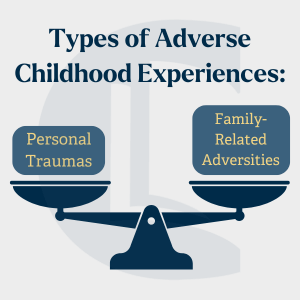
Each ACE contributes to a child’s overall score, with studies consistently showing that higher ACE scores correlate with more significant health and life difficulties in adulthood. For instance, a child experiencing physical abuse, parental alcoholism, and domestic violence would have an ACE score of three. As these scores accumulate, so does the likelihood of adverse outcomes across multiple domains, including mental health, physical health, and socioeconomic status.
Research highlights the cumulative impact of ACEs on adult health. The CDC’s studies show that individuals with higher ACE scores are more likely to experience a range of poor health outcomes. For instance:

In the UK, the Early Intervention Foundation (EIF) reports that individuals with high ACE scores are four times more likely to engage in sexual risk-taking, struggle with mental health problems, and face problematic alcohol use. The risk of drug use and experiencing violence (either directed toward others or themselves) is increased by sevenfold.
Such findings emphasise the need for trauma-informed care and highlight how childhood adversity does not only affect the immediate years but extends far into adult life. Therapists must remain aware of these long-term effects when working with clients, especially those whose personal or family histories suggest high levels of childhood trauma.
Understanding ACEs allows therapists to contextualise many of the presenting issues clients bring into therapy. Childhood experiences of trauma can often underlie or exacerbate adult issues such as anxiety, depression, addiction, and difficulties in interpersonal relationships. Practitioners should integrate trauma-informed care into their practice, recognising the ongoing influence of early adversity.
Reflective practice is essential in addressing ACE-related issues. Practitioners are encouraged to reflect on their current caseload, considering how many clients might have experienced one or more ACEs. Discussions with peers and supervisors can further enhance understanding, as sharing case examples can provide valuable insights into how to approach interventions. This practice is sometimes called vicarious learning, where therapists learn from each other’s experiences and perspectives.
Furthermore, incorporating ACE-informed assessments into client evaluations can better inform treatment plans. Understanding a client’s background, particularly their ACE score, can guide therapeutic interventions and help you set realistic goals for healing and growth.
Childhood Experiences and Their Mental Health Impact
Adverse Childhood Experiences (ACEs) are potentially traumatic events before age 18, such as abuse, neglect or family dysfunction, that can shape long‑term physical and mental health outcomes into adulthood. Understanding ACEs helps counsellors recognise how early life adversity may underlie presenting issues in therapy.
Childhood experiences of trauma and adversity can increase the risk of depression, anxiety, addiction and other health challenges in later life, with higher cumulative ACEs linked to more significant difficulties; trauma‑informed practice helps contextualise these lifelong effects in counselling.
Therapists integrate ACE awareness by gently exploring a client’s history of adversity, considering its impact on current functioning, and tailoring interventions within a safe, collaborative, non‑judgmental framework that emphasises healing and resilience.
The evidence supporting the profound and lasting effects of Adverse Childhood Experiences is overwhelming. For counsellors and psychotherapists, integrating an awareness of ACEs into everyday practice is crucial.
Reflecting on past and present clients, it becomes clear that many may be grappling with the repercussions of childhood trauma, even if it is not immediately apparent. As such, counsellors can use this knowledge to better support clients on their journey towards recovery and resilience. Engaging with peers and supervisors in reflective discussions further enhances the ability to provide comprehensive, informed care.
Centers for Disease Control and Prevention. (2022). Preventing Adverse Childhood Experiences (ACEs) to improve U.S. health. Retrieved from https://www.cdc.gov/media/releases/2019/p1105-prevent-aces.html
Early Intervention Foundation. (2022). The impact of adverse childhood experiences on adult health outcomes. Retrieved from https://www.eif.org.uk/
Counselling Tutor provides trusted resources for counselling students and qualified practitioners. Our expert-led articles, study guides, and CPD resources are designed to support your growth, confidence, and professional development.
👉 Meet the team behind Counselling Tutor
Notice any broken link or issues with this resource? Kindly let us know by email
Email us