Your Free Handout
Working with Loss and Bereavement Theories
Grief and bereavement are universal experiences yet individual in their manifestations. For therapists working with clients facing loss, understanding grief’s complexities is vital. This post explores the foundations of grief theories and types of loss, offering practical insights for therapeutic settings.
By exploring this material, you will gain:
Working with Loss and Bereavement Theories
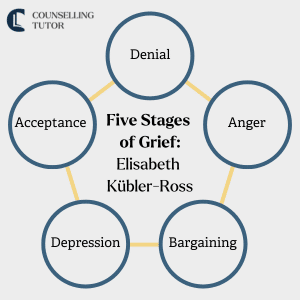
Kübler-Ross introduced the widely recognised model of grief stages: Denial, Anger, Bargaining, Depression, and Acceptance (DABDA). While seminal, critiques highlight its simplicity, emphasising that grief does not follow a linear path. Therapists should use this model as a framework rather than a prescriptive guide.
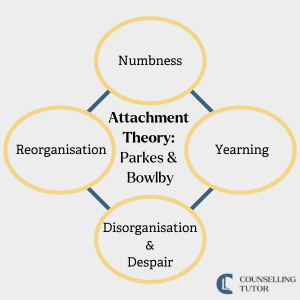
Parkes and Bowlby applied attachment theory to grief, proposing a sequence of Numbness, Yearning, Disorganisation and Despair, and Reorganisation. This model underscores grief’s physical and emotional impacts and its ties to attachment styles.
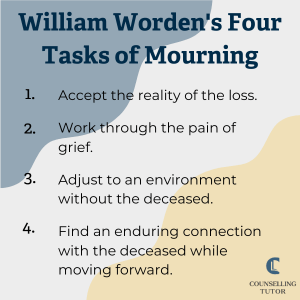
Worden proposed a task-oriented approach:
This non-linear model emphasises client autonomy and the therapeutic process.
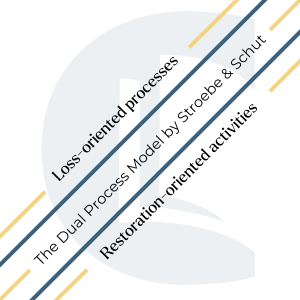
The Dual Process Model addresses the oscillation between:
This approach offers a flexible, client-centred perspective, balancing emotional processing with life adjustments.
Understanding these models is just the beginning. Counsellors and psychotherapists must also recognise the somatic impacts of grief, where clients experience physical symptoms like headaches or stomach pains that mirror the experiences of the deceased. For example, clients grieving a loved one who passed from cancer may report similar sensations, an area requiring careful exploration. Moreover, the sociocultural context of grief cannot be ignored. Cultural norms shape grieving behaviours, and sensitivity to these differences is essential for establishing trust and rapport.
While early models like DABDA provide foundational insights, practitioners should approach them as adaptable frameworks. Professionals like Colin Murray Parkes’ critique of linear models reminds us that grief is highly individualised.
Instead of a fixed sequence, clients often experience emotions cyclically or simultaneously, requiring a more fluid therapeutic approach. Modern models, such as the Dual Process Model, account for this variability, emphasising the interplay between emotional and cognitive domains.
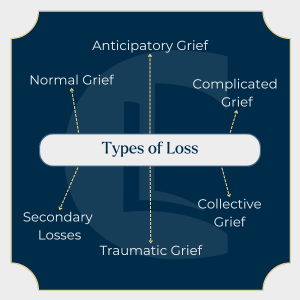
Grief is not always rooted in death. You might frequently encounter grief related to role transitions, such as retirement or losing a parental role when children move away. These shifts can create a void in identity, requiring clients to redefine their sense of self.
Similarly, loss of material stability, such as through redundancy or financial crisis, can evoke profound grief, often overshadowed by logistical concerns. Therapists must attune themselves to these dynamics to fully address the multifaceted nature of grief.
To support clients effectively, practitioners must first reflect on their relationship with loss:
These introspections are essential to maintaining therapeutic presence and intersubjective connection.
Counsellors and psychotherapists must also evaluate their supervisory relationships. Working with supervisors experienced in grief and loss is crucial, as their insights can support you in navigating complex client dynamics. Furthermore, acknowledging that grief is pervasive in most client presentations can prepare you to encounter it in unexpected contexts, such as relationship issues or career transitions.
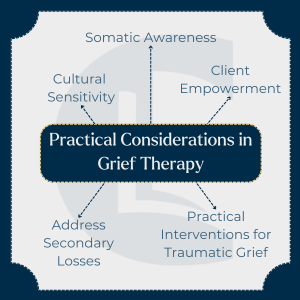
Cultural norms and practices deeply influence grief. For instance, some cultures emphasise collective mourning through rituals and ceremonies, while others focus on individual processing. Therapists must remain sensitive to these cultural frameworks, as they can shape how clients express grief and seek support.
For example, communal rituals like wakes or public memorials might serve as coping mechanisms, while their absence can exacerbate feelings of isolation. Understanding these nuances is essential for creating culturally competent interventions.
Working with Loss and Bereavement Theories
Counsellors often draw on several foundational grief theories to understand a client’s experience, including Kübler‑Ross’s five stages of grief, attachment‑based models by Parkes and Bowlby, Worden’s four tasks of mourning, and the Dual Process Model that highlights oscillation between loss‑oriented and restoration‑oriented coping.
Therapists should reflect on their own experiences of loss, ensure they have appropriate supervision and personal therapy where needed, and build skills in cultural sensitivity, somatic awareness, and practical interventions to support clients through diverse and individual grief responses.
Loss can take many forms in counselling, including anticipatory loss before an expected death, complicated grief with prolonged distress, secondary losses like changes in roles or identity, and grief related to non‑death losses such as redundancy or relationship breakdowns.
Grief therapy is not about “fixing” grief but holding space for clients to explore, process, and adapt. By integrating foundational theories, reflecting on personal experiences, and embracing cultural contexts, therapists can offer compassionate, informed support to those navigating loss.
By grounding your practice in these frameworks, you contribute meaningfully to your clients’ journeys of loss and healing.
Cruse Bereavement Support, n.d. Homepage. [online] Available at: https://www.cruse.org.uk
Kübler-Ross, E., 1969. On Death and Dying. New York: Scribner.
Samaritans, n.d. Homepage. [online] Available at: https://www.samaritans.org
Stroebe, M. and Schut, H., 1999. The Dual Process Model of Coping with Bereavement: Rationale and Description. Death Studies, 23(3), pp.197-224.
Worden, J.W., 2009. Grief Counselling and Grief Therapy: A Handbook for the Mental Health Practitioner. 4th ed. New York: Springer.
Counselling Tutor provides trusted resources for counselling students and qualified practitioners. Our expert-led articles, study guides, and CPD resources are designed to support your growth, confidence, and professional development.
👉 Meet the team behind Counselling Tutor
Notice any broken link or issues with this resource? Kindly let us know by email
Email us