Certificate in Online & Telephone Counselling
Get expert training from the Counselling Tutor team on how to transfer face-to-face skills to work safely and ethically online and via telephone
Written by Paul Cullen, Qualified Counsellor & Supervisor.
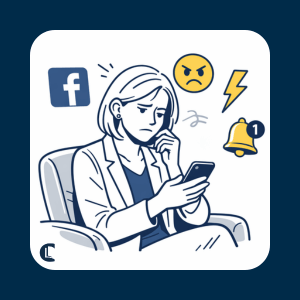
A qualified counsellor posts in a professional Facebook group:
“I really struggle with the phrase ‘you can practice without qualifications, but it’s unethical.’ Why do we keep saying this? It feels like we’re giving permission whilst pretending we’re not. I hate seeing this advice repeated.”
Within hours, dozens of comments appear. Several analyse their use of the word ‘hate’ and suggest they need to reflect on why this language triggers them. Others explain patiently that it’s simply a statement of fact, not advice, and that they’re misunderstanding.
One comments: “You genuinely seem like a dog with a bone here.” Another writes: “Maybe spend some time reflecting on this statement and what you actually ‘hate’ about it.” Someone else: “I’d love to have been in a process group with you.”
The Disinhibition Effect
What are you feeling as you read this?
If you think the original poster has a point, are you irritated by the responses? Wanting to defend them? If you think the responses are reasonable, are you frustrated by them ‘taking things personally’? Notice that urge to take a side. Notice the certainty forming about who’s right. Notice whether you’re drafting a response in your head right now.
Now ask yourself: would you say these things to a colleague’s face at a conference? Would you comment on their word choice, analyse their emotional state, make remarks about process groups? Would the exchange feel this charged, this certain, this impermeable?
This is what I want us to examine together. Not because anyone in that exchange is a bad person, but because something about these online spaces changes how we engage with each other, even when we’re trying to be helpful, even when we think we’re being reasonable.
When the individual has a warmth and understanding optimistic about the potentiality of human nature, I get excited and enthusiastic. When I participate in a group characterised by explosive tensions, by destructiveness, I am pessimistic.
– Carl Rogers (1961)
As a person-centred therapist, I recognise this paradox in myself. In the therapy room, I am curious, empathic and able to hold difference with compassion. Online, in professional Facebook groups and forums, I sometimes feel irritation rising, a pull towards correction, an encounter with what feels like impermeable certainty: exactly the kind of brick wall I sensed in that exchange above.
If you have noticed this pattern in yourself, you are not alone, and you are not failing as a therapist. Research on online behaviour helps explain what may be happening. This is not to excuse harmful conduct, but to understand the powerful ways digital platforms shape our interactions, often without our awareness. That understanding matters because, as gatekeepers to a profession that profoundly affects people’s lives, we have a responsibility to maintain both accountability and integrity in how we engage with one another.
This article combines existing research on online behaviour with my experiences as a therapist, client and moderator of professional online spaces. It is offered as reflection and invitation to dialogue, not as definitive prescription.
In her 2025 BACP award-winning research on online disinhibition in video therapy, Broome identified a significant gap through qualitative interviews with counsellors delivering video therapy. While client behaviour online has been studied, counsellor experiences have been largely overlooked. If counsellor disinhibition in structured clinical video work has received limited attention, counsellor behaviour in unstructured professional peer spaces such as Facebook groups, forums and social media discussions has been largely invisible.
Yet these online professional spaces are where culture is formed, norms are established and collective identity is shaped. They are where exchanges like the one at the start of this article play out daily. When disinhibition operates without awareness, it can undermine both the values we claim to uphold and our ability to hold each other accountably thoughtfully and effectively.
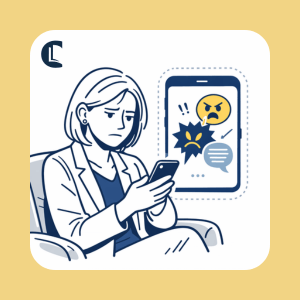
Suler (2004) described the online disinhibition effect as the tendency for people to say and do things in digital spaces that they would not in person. This can manifest as benign disinhibition, such as increased openness and self-disclosure, or toxic disinhibition, such as hostility, criticism and cruelty. The same psychological mechanisms underpin both outcomes. Context and group norms determine which emerges.
Certain features of digital platforms contribute to this shift in behaviour. Anonymity, even when real names are used in large groups, can create a sense of being unknown. Invisibility removes facial expressions and immediate relational feedback. We cannot see the hurt on someone’s face when we type ‘maybe you need to reflect on why you’re so triggered by this.’ Asynchronicity allows people to post and walk away without witnessing the impact. There is also often a felt separation between online interaction and what is perceived as real professional life.
These are not personal failings. They are structural features that influence all users, regardless of training or intention. Understanding this does not absolve us of responsibility for our conduct. It simply reveals the forces we are navigating when we attempt to maintain professional standards online.
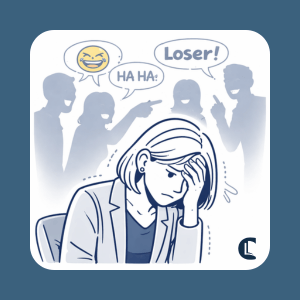
Individual disinhibition is only part of the picture. The Social Identity model of Deindividuation Effects, known as SIDE, helps explain how anonymity and immersion in large groups intensify conformity pressures (Reicher et al., 1995). When individual identity becomes less salient, group identity strengthens. We begin to think of ourselves less as individual practitioners with nuanced perspectives and more as members of a particular counselling community.
Conformity to perceived group norms increases. Groups polarise rather than moderate. Others are seen less as complex individuals and more as representatives of positions. In the exchange at the start of this article, notice how quickly a group consensus formed about what the ‘correct’ view was, and how those offering alternative perspectives were subtly corrected or dismissed.
Certain topics become flashpoints because they function as identity markers. Training routes, membership bodies, regulation and frameworks such as neurodiversity can activate both personal anxiety (‘am I legitimate?’) and boundary marking (‘are they one of us?’). When legitimate professional concerns become entangled with identity threat and platform-amplified conflict, it becomes difficult to distinguish thoughtful accountability from reactive pile-ons.
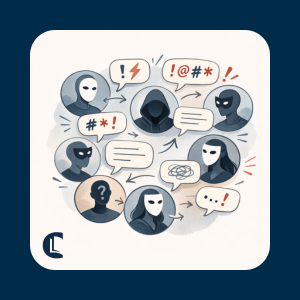
A recent structural shift has amplified this dynamic. Facebook removed administrative control over pseudonyms, a policy change affecting how member profiles are displayed in groups, allowing members to post under alternative identities in professional spaces (Meta, 2024). While not mandatory, this change alters the sense of continuity and accountability. Those posting anonymously may feel freer to express controversial views. Those responding may feel more disinhibited when engaging with someone they cannot identify. In communities where accountability and professional continuity matter, this shift carries significant implications.

Get expert training from the Counselling Tutor team on how to transfer face-to-face skills to work safely and ethically online and via telephone
As both moderator and participant in professional online groups, I recognise these patterns in myself. I notice a pull towards correction and defensiveness when reading posts about training or ethics. I feel irritation rising in response to certainty that would evoke curiosity in the therapy room. I encounter what feels like dialogue becoming impossible: the very brick wall quality I sensed in the opening exchange.
I also notice the word unethical used without reference to specific frameworks such as BACP, UKCP or NCPS. Detached from clear ethical reasoning, it can become a weapon rather than an invitation to thoughtful analysis. When we use the term loosely, we risk diluting our ability to address genuine ethical violations with the seriousness they deserve.
I observe strong voices dominating discussions whilst thoughtful practitioners remain silent. I feel my own hesitation about posting, despite being qualified and experienced. I notice pseudonymous accounts and wonder who I am speaking to and what professional accountability exists.
What is often triggered in me relates to values. I try to move towards curiosity about what might sit behind a strong opinion, perhaps an experience or belief that differs from my own. Yet the platforms make this stance difficult to sustain. When someone receives comments like ‘you seem like a dog with a bone,’ I wonder: what is their experience? What professional pain point has been activated? But it is harder to hold a sense of personhood in mind when identity is obscured and context is limited. This does not mean abandoning professional judgement. It means acknowledging how easily reactivity can disguise itself as principle.
As a moderator, I also notice how my role creates its own disinhibition risks. When I feel irritated by a post, I have tools others do not. I can delete, warn or remove someone from the group. This means I must distinguish between enforcing group rules that maintain professional integrity and using moderator power to silence views that simply trigger me personally. This requires consulting with colleagues before acting, checking decisions against stated group guidelines rather than personal comfort, and recognising when I need to step back because I am too close to the issue. The position of moderator can become a tool of power if wielded reactively. When I see exchanges like the opening scenario, I must ask: is intervention needed to maintain professional standards, or am I reacting to my own discomfort with the conflict?
I have also experienced online disinhibition from the other side as a client in online therapy. In an introductory session, I noticed my language becoming more unfiltered than I would use in professional contexts. I swore in ways I would not normally do. Mid-session, I apologised and realised I was experiencing the very effect I had been observing in others. Even with professional awareness, I was not immune. The mechanisms that can undermine professional dialogue can also facilitate emotional honesty in therapy. The force itself is neutral. Context shapes outcome.
Professional ethics codes expect congruence across contexts. The BACP Ethical Framework emphasises integrity and consistency. We are expected to be the same practitioners online as we are in person (BACP, 2018). Yet platform design systematically alters behaviour. Would those who commented ‘maybe you need to reflect on your triggers’ say that to a colleague face-to-face? Perhaps. But the ease with which such comments flow online, the certainty with which they are delivered, suggests something about the medium is enabling a different quality of interaction.
Current guidance addresses confidentiality and boundary violations, but to my knowledge offers little on maintaining thoughtful accountability in the face of platform-amplified certainty or navigating pseudonymous professional spaces. The gap extends to supervision. Whilst clinical supervision increasingly addresses online therapy delivery, practitioner conduct in professional online communities remains largely unexamined. These spaces are often dismissed as social media, yet they profoundly shape professional culture and influence how standards are interpreted and enforced.
Awareness creates choice. When I notice myself behaving differently online than I would face-to-face, I can pause and ask what is driving my reaction. Would I say this in person? Am I responding from considered ethical analysis or from reactive emotion? Am I grounding my concerns in recognised frameworks, or in personal discomfort? If I feel the urge to comment ‘you seem triggered by this,’ would I phrase it that way in a supervision group?

Understanding disinhibition is not about excusing harmful conduct or abandoning accountability. Some positions require clear challenge, particularly when harm, discrimination or unsafe practice are at stake. The question is how that challenge is delivered. In the opening scenario, those who responded may have had valid points about the complexity of unregulated practice. But the delivery (analysing the poster’s emotional state, making comments about their persistence, suggesting they lack reflection) shifts from professional dialogue to personal correction. Accountability need not become aggression. Professional judgement need not become a pile-on. The standard is not silence, but congruence.
Supervision may need to evolve to include explicit reflection on digital professional presence. Professional bodies may need updated guidance that acknowledges structural platform effects whilst maintaining responsibility for professional standards. For practitioners seeking to deepen their understanding of online dynamics, resources on online and telephone counselling can support ongoing professional development. Recognising these influences does not remove accountability. It strengthens it by making it more deliberate.
The paradox Rogers described, optimism about individuals and pessimism about groups, need not be inevitable. Understanding how platforms and group dynamics shape behaviour gives us a degree of choice. We can notice the pull towards certainty, pause and reconnect with curiosity. We can hold standards without abandoning dignity.
These platforms are designed to influence behaviour. We are not weak for being affected by them. We are responsible for how we respond once we understand what is happening. When we encounter exchanges like the opening scenario, whether as participants, observers or moderators, we can ask: what is the platform doing to us right now? What would this conversation look like face-to-face? What am I feeling, and is that feeling leading me towards connection or disconnection?
Many of us chose this profession because we value empathy, curiosity and human dignity. Those values do not have to disappear online, nor does our responsibility to hold one another accountable. The task is to ensure that how we deliver challenge reflects the same professionalism we would expect face-to-face. We can hold each other accountable and hold ourselves accountable at the same time by remaining conscious of how platforms shape us and choosing congruence anyway.
The Disinhibition Effect
The online disinhibition effect describes how people say or do things in digital spaces that they would not express face-to-face. In counselling contexts, this can show up as increased openness and self-disclosure, or as criticism and hostility in professional forums and social media groups.
Digital platforms reduce visual cues, increase anonymity and allow asynchronous replies, which can weaken relational feedback and heighten reactivity. In professional counselling groups, this can intensify certainty, polarisation and “pile-ons”, even among experienced practitioners who value empathy and curiosity.
Counsellors can pause and reflect before posting, asking whether their response is grounded in recognised ethical frameworks such as the BACP Ethical Framework or in personal reactivity. Bringing digital presence into supervision and focusing on congruence, accountability and respectful challenge helps maintain professional standards in online communities.
British Association for Counselling and Psychotherapy. (2018). Ethical framework for the counselling professions. BACP.
Broome, K. L. (2025). Online disinhibition in video-conferencing therapy: Counsellor experiences [Video]. British Association for Counselling and Psychotherapy.
Counselling Tutor. (n.d.). The disinhibition effect in online therapy. Retrieved from https://counsellingtutor.com/disinhibition-effect-in-online-therapy/
Counselling Tutor. (n.d.). Online and telephone counselling course. Retrieved from https://counsellingtutor.com/online-and-telephone-counselling-course/
Meta. (2024). Updates to Facebook Groups profile display settings. Meta Platforms.
Reicher, S. D., Spears, R., & Postmes, T. (1995). A social identity model of deindividuation phenomena. European Review of Social Psychology, 6(1), 161–198. https://doi.org/10.1080/14792779443000049
Rogers, C. R. (1961). On becoming a person: A therapist’s view of psychotherapy. Houghton Mifflin.
Suler, J. (2004). The online disinhibition effect. CyberPsychology & Behavior, 7(3), 321–326. https://doi.org/10.1089/1094931041291295
This article was written and reviewed by the author. Claude (Anthropic) was used as a supportive tool to assist with formatting, layout clarity and language refinement. All content, interpretations and ethical positions were created and checked by the author.
Counselling Tutor provides trusted resources for counselling students and qualified practitioners. Our expert-led articles, study guides, and CPD resources are designed to support your growth, confidence, and professional development.
👉 Meet the team behind Counselling Tutor
Notice any broken link or issues with this resource? Kindly let us know by email
Email us