My Reference Guide
Using Humour Therapeutically: A Practitioner’s Reference Guide
As a counsellor or psychotherapist, you may find yourself questioning whether humour has a rightful place in the therapy room. After all, isn’t counselling meant to be a serious endeavour? Yet, humour is a universal, life-enhancing aspect of human experience. When used ethically and with therapeutic intent, it can serve as a powerful tool for relational healing.
This article explores the therapeutic application of humour, particularly within the person-centred framework. We examine humour’s capacity to deepen connection, encourage congruence, and catalyse emotional processing – while acknowledging the risks it carries if used without empathy and judgement.
Using Humour Therapeutically: A Practitioner’s Reference Guide
From this exploration of humour in counselling, you will gain:
According to psychologist Rod Martin (2007), humour is more than laughter – it’s a social, cognitive, emotional, and behavioural process. It is closely related to joy and what Hobbes called “sudden glory” – a feeling of invincibility and uplift. In the therapeutic setting, humour can serve as a mutual emotional exchange, enhancing connection when both client and therapist share the moment authentically.
Yet, humour must be used with care. It can be life-affirming or a subtle form of attack. Its potency demands that therapists remain acutely aware of timing, context, and relational attunement.
While humour can be a healing force, it also has a destructive side. Misapplied, it can become a tool for minimising, deflecting, or even harming. Sarcasm, teasing, and so-called “banter” often mask subtle aggression or collusion with avoidance. Clients who habitually joke may use humour as a defence, shielding vulnerability or masking distress.

Some clients might say:
“I’m the Joker. I get on with everyone. Everyone’s smiling around me. But I don’t want that role anymore.”
Therapists must be especially mindful not to reinforce these personas or use humour to ease their own discomfort in the face of client pain. When used without attunement, humour risks breaching boundaries, colluding with denial, or damaging the therapeutic relationship.
Research and clinical literature highlight humour’s potential to:
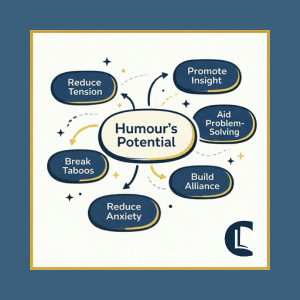
These benefits are described across conceptual and empirical work (e.g. Gladding, 1995; Buckman, 1994; Franzini, 2001; Panichelli, 2013; Sarink et al., 2023; Sun et al., 2023).
When clients laugh with you – rather than being laughed at – humour becomes a bridge, offering relief and reframing that support a shift in perspective, leading to growth.
Emerging evidence suggests that humour can be helpful in some cross‑cultural counselling contexts when used respectfully and with cultural awareness (e.g. Vereen et al., 2006; Vereen, 2013). It can communicate a sense of shared human experience: “You are not alone.”
Influential figures such as Freud, Adler, Erikson, and Maslow have all explored humour’s role in psychological development.
In the person-centred approach, the actualising tendency is the drive towards growth, creativity, and fulfilment. Humour can reflect this life force – expressed in words like joy, brightness, happiness, and even dance (Woskett, 1999). Humour acts as a creative synthesis, bringing disparate feelings into coherence (Lemma, 2000).
Humour helps establish psychological contact by bridging the gap between client and counsellor. Laughter can signal resonance, creating a shared moment that validates the client’s experience.
For many practitioners, humour is an authentic expression of their core self. It’s a natural extension of congruence – the alignment between inner experience and outward expression.
When clients bring humour, they often test the waters: Can you accept this part of me too? Responding with warmth, not judgment, communicates profound acceptance.
Humour can communicate empathy in subtle yet powerful ways. Through timing, attunement, and shared perspective, it shows that the therapist “gets it.” It can also help clients reframe traumatic experiences, reclaim agency, and recover joy.
Relational depth is that mutual, embodied sense of connection where both client and counsellor feel seen and understood. Humour can be a conduit for this deep resonance, resonating with what Stedman and Dallos (2009) describe as “neural resonance.” A shared joke or anecdote may unlock emotional access that cannot be reached through more purely cognitive dialogue.
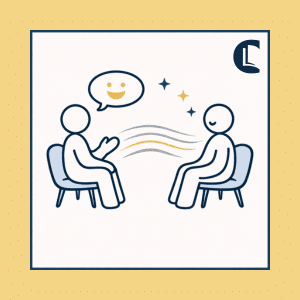
Clients may find humour helps them process complex emotions by:
Whether it’s “dishwasher disputes” in couples therapy or reclaiming power after emotional abuse, humour allows clients to see patterns from a fresh, more compassionate perspective.
Humour has a unique capacity to highlight paradox – a core theme in many therapeutic breakthroughs. When clients laugh at the contradiction between their self-criticism and their life experiences, they often gain a clearer understanding.
For example, a therapist might gently reflect:
“So you were neglected in childhood, bullied at school, experienced abusive relationships, and lost a loved one… and you still think you should ‘just be alright’?”
That subtle humour is not mocking but illuminating. It reveals internalised expectations and opens space for self-acceptance.
Humour becomes not a distraction from pain, but a reframing of it – a truth-teller in disguise.
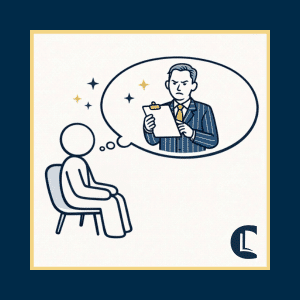
Humour also aids in working with multiple internal selves – what Dave Mearns referred to as “configurations of self.” Clients may personify critical voices or protective roles through humour, enabling internal dialogue, acceptance, and integration.
One client, for example, imagined her inner critic as a clipboard-carrying risk assessor in a pinstripe suit – helpful, necessary, but no longer in charge.
Such use of humour helps clients:
Despite its benefits, humour can be damaging when misapplied:
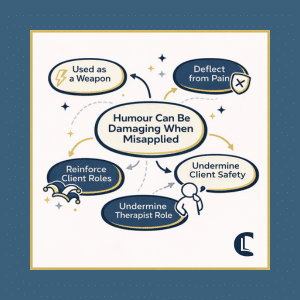
Therapists must be attuned to power dynamics, cultural context, and the client’s readiness to engage in the therapeutic process.
Many therapists, particularly trainees, feel anxiety about using humour:
Such doubt can lead to the suppression of what might otherwise be authentic and helpful responses. Ethical frameworks (e.g. BACP, 2018) can support reflection here, helping therapists balance non‑maleficence (avoiding harm) with beneficence (promoting good) while remaining congruent and authentic.
For many practitioners, especially those early in training, humour in therapy brings a mix of anxiety and self-doubt.
These are common fears that arise when humour spontaneously appears in sessions. Counsellors may worry that humour contradicts the “seriousness” of therapy, or fear doing harm through misjudgement.
Yet, over time, many come to recognise humour as part of their authentic repertoire. It requires risk-taking, self-trust, and ethical grounding. As Mearns and Thorne (1999) affirm:
“We aim to make all our relevant attributes available, where this is appropriate.”
Building courage to use humour ethically is part of the counsellor’s developmental journey.
Using Humour Therapeutically: A Practitioner’s Reference Guide
Humour in counselling is a relational and emotional process that can deepen connection, support insight, and help clients reframe difficult experiences. When used with empathy and attunement, it becomes a powerful tool for healing and growth.
Humour can reduce tension, encourage emotional processing, and strengthen the therapeutic relationship. It helps clients feel understood, supports new perspectives, and can make overwhelming feelings more manageable.
If used without care, humour can feel dismissive, reinforce avoidance, or undermine the therapeutic relationship. Counsellors must be sensitive to timing, context, and the client’s experience to ensure humour remains supportive rather than harmful.
Humour, when used judiciously, can be a life-giving breath in even the most harrowing encounters (Woskett, 1999). It affirms our shared humanity, provides momentary relief, and often reflects a more profound truth.
As Carl Rogers reminds us:
“Being trustworthy does not demand that I be rigidly consistent, but that I be dependably real.” — Rogers, 1961
In your practice, may humour become not a distraction, but a signpost of relational connection, emotional movement, and genuine congruence.
The ethical principle of non-maleficence may dominate early in a counsellor’s development, sometimes leading to avoidance of potentially beneficial interventions like humour. However, with experience comes a deeper understanding of beneficence – doing good. In this context, humour, when used with empathy and attunement, becomes a mark of therapeutic maturity, not irresponsibility.
Adams, P. & Mylander, M. (1998). Gesundheit! Healing Arts Press.
BACP. (2018). Ethical Framework for the Counselling Professions.
Buckman, E. S. (1994). Handbook of Humor: Clinical Applications in Psychotherapy.
Franzini, L. R. (2001). Humor in Therapy: The Case for Training Therapists in Its Uses and Risks.
Gladding, S. T. (1995). Humour in Counselling: Using a Natural Resource.
Goldin, E. & Bordan, T. (1999). The Laughing Cure.
Lemma, A. (2000). Humour on the Couch.
Martin, R. A. (2007). The Psychology of Humour.
Mearns, D. & Cooper, M. (2005). Working at Relational Depth.
Mearns, D. & Thorne, B. (1999). Person-Centred Counselling in Action.
Richmann, J. (2006). The Role of Psychotherapy and Humor for Death Anxiety.
Rogers, C. R. (1961). On Becoming a Person.
Stedman, J. & Dallos, R. (2009). Reflective Practice in Psychotherapy and Counselling.
Vereen, G. L. et al. (2006). The Use of Humour when Counselling African American College Students.
Woskett, V. (1999). The Therapeutic Use of Self.
Transparency note
This article was written and reviewed by human contributors. AI was used as a supportive tool to assist with formatting, layout clarity, and language refinement. All content, interpretations, and ethical positions were created and checked by the authors.
Counselling Tutor provides trusted resources for counselling students and qualified practitioners. Our expert-led articles, study guides, and CPD resources are designed to support your growth, confidence, and professional development.
👉 Meet the team behind Counselling Tutor
Notice any broken link or issues with this resource? Kindly let us know by email
Email us