Online and Telephone Counselling Training – ENROLMENT OPEN

360 – Rupture and Repair in Counselling

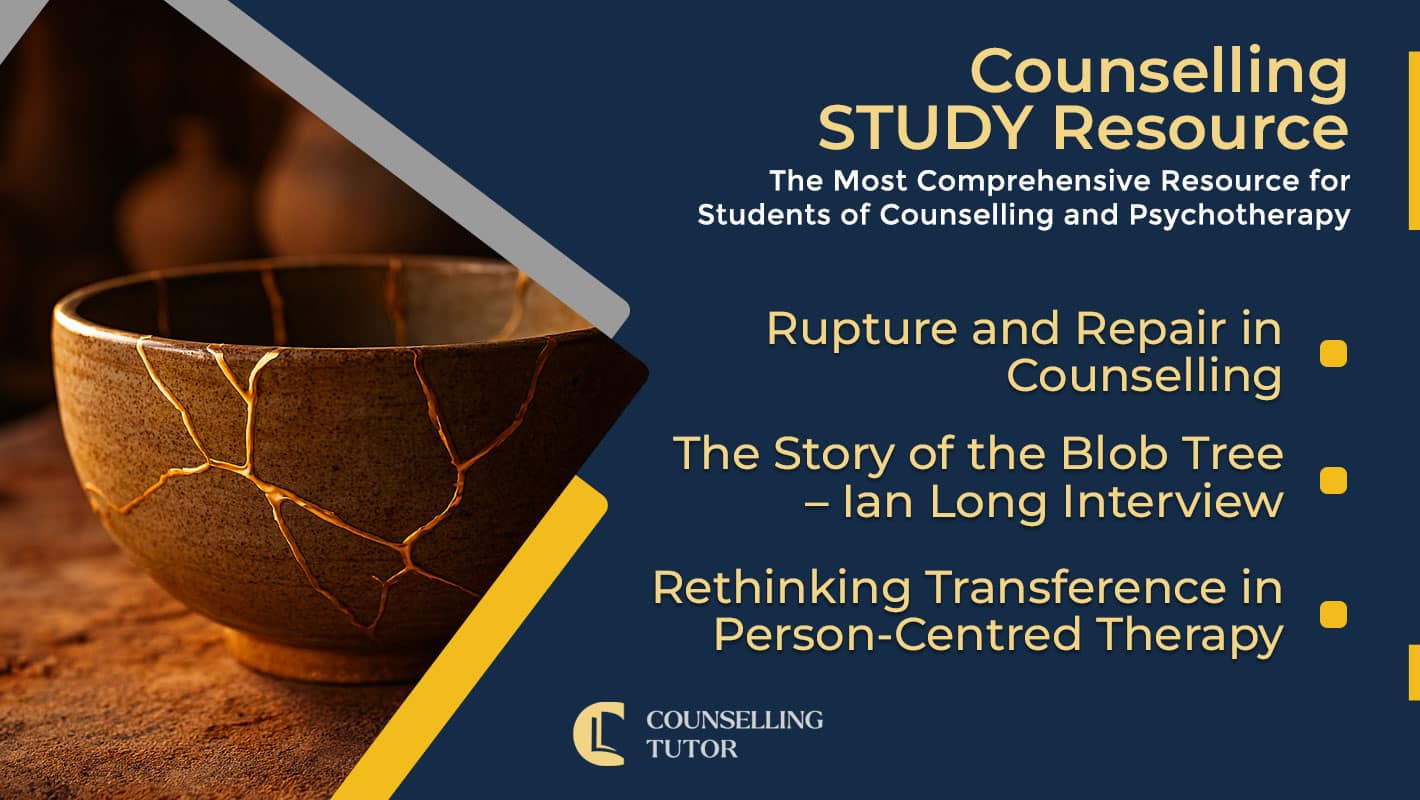
CT-Podcast-Ep360 featured image: Topics Discussed: Rupture and Repair in Counselling - The Story of the Blob Tree – Ian Long Interview - Rethinking Transference in Person-Centred Therapy

The Story of the Blob Tree Ian Long Interview Rethinking Transference in Person-Centred Therapy

subscribe_itunes button small

In Episode 360 of the Counselling Tutor Podcast, your hosts Rory Lees-Oakes and Ken Kelly take us through this week’s three topics:

Firstly, in ‘Ethical, Sustainable Practice’, they explore rupture and repair in counselling, looking at the inevitable ruptures that can occur in the therapeutic relationship and how recognising and repairing these moments builds resilience and strengthens the therapeutic alliance.

Then in ‘Practice Matters’, Rory speaks with Ian Long, illustrator and co-creator of the iconic Blob Tree, about the origins, evolution, and global impact of these powerful visual tools in therapy and education.

And finally in ‘Student Services’, Rory and Ken rethink transference in person-centred therapy, offering insight into how these dynamics show up during training and why they matter – even outside of client work.

Download your free Handout: Rupture and Repair in Counselling

Rupture and Repair in Counselling [starts at 03:30 mins]

Rory and Ken explore rupture and repair in counselling, emphasising that relational ruptures in therapy are not failures but essential opportunities for growth, learning, and repair.

Key points discussed include:

  • Ruptures are normal in therapy and can result from misattunement, transference, or triggering of past trauma.
  • Common signs include client withdrawal, silence, defensiveness, or abrupt subject changes.
  • Effective repair relies on naming the shift gently and being curious about the client’s inner experience.
  • Understanding your own attachment and trauma patterns is crucial for managing ruptures.
  • Repairing a rupture models emotional resilience and can deepen the therapeutic relationship.
  • Supervision is essential for processing ruptures and supporting ethical, attuned practice.

See Counselling Skills Used in Real Sessions by Qualified Therapist

Real Sessions – Real Presentations – Real Skills
Gain the competence and confidence to use counselling techniques effectively!

The Story of the Blob Tree – Ian Long Interview [starts at 23:20 mins]

Rory speaks with Ian Long, the illustrator and co-creator of the Blob Tree, about how this simple yet profound tool has supported emotional expression worldwide for four decades.

Key points from the interview include:

  • The Blob Tree features a group of non-verbal, genderless characters that reflect different emotional states and interactions.
  • Originally created for youth work, the tool has become widely used in counselling, education, and social work.
  • It facilitates expression for those who struggle with words, including children, non-verbal individuals, and trauma survivors.
  • The success of the tool lies not just in the illustrations but in the skill of the practitioner asking open-ended, exploratory questions.
  • The Blob Tree and related tools are now used in over 150 countries and across various disciplines, including business and humanitarian work.
  • Ian reflects on his creative partnership with the late Pip Wilson and the lasting legacy of their work in fostering emotional literacy.

Counselling Student Library

On-demand access to a rich lecture library covering theory, skills, and professional development for counselling students—Mapped to the UK awarding body criteria

“The Student Library has been BRILLIANT, I can’t recommend it enough!
It has been a lifeline in helping me prepare for practice and my first clients. If you’re considering it, go-for-it, it’s absolutely worth it!”
Kelly – Graduated and now in practice.

Rethinking Transference in Person-Centred Therapy [starts at 44:58 mins]

Rory and Ken challenge the notion that transference has no place in person-centred practice, encouraging students to explore how it shows up in training and personal development.

Key points include:

  • Carl Rogers acknowledged transference, though he chose to respond to it rather than interpret it.
  • Transference can occur even outside of client work – in group projects, PD groups, and skills practice.
  • Feelings like the urge to rescue, impress, or withdraw may signal countertransference and warrant reflection.
  • Journaling, peer reflection, and personal therapy can support deeper understanding of relational dynamics.
  • Bringing transference into PD groups (not as blame, but as exploration) helps develop emotional awareness.
  • Recognising these patterns early prepares students for ethical, attuned work with future clients.

Free Handout Download

Rupture and Repair in Counselling

Counsellor CPD Library

Get on-demand Certified CPD that is implementable in your practice

  • Over 150 hours of on-demand CPD lectures to help you stay current with your CPD ethical requirements
  • Support, and be supported, by thousands of other counsellors as a member of the exclusive online community.
  • Access your learning anytime you want … anywhere you choose … using any device type — desktop or mobile.

£100 off the WebHealer.net “Do it for me” service

  • WebHealer are the go-to provider of websites for private practitioners in the UK.
  • Established over 20 years, WebHealer offers a non-technical and fully supported service to help therapists grow their private practice.
  • Just one customer from your website each year pays 
for their service.
Use coupon code CT100 Visit webhealer.net