Online and Telephone Counselling Course – Enrolment OPEN

367 – Talking to Clients About AI in Therapy

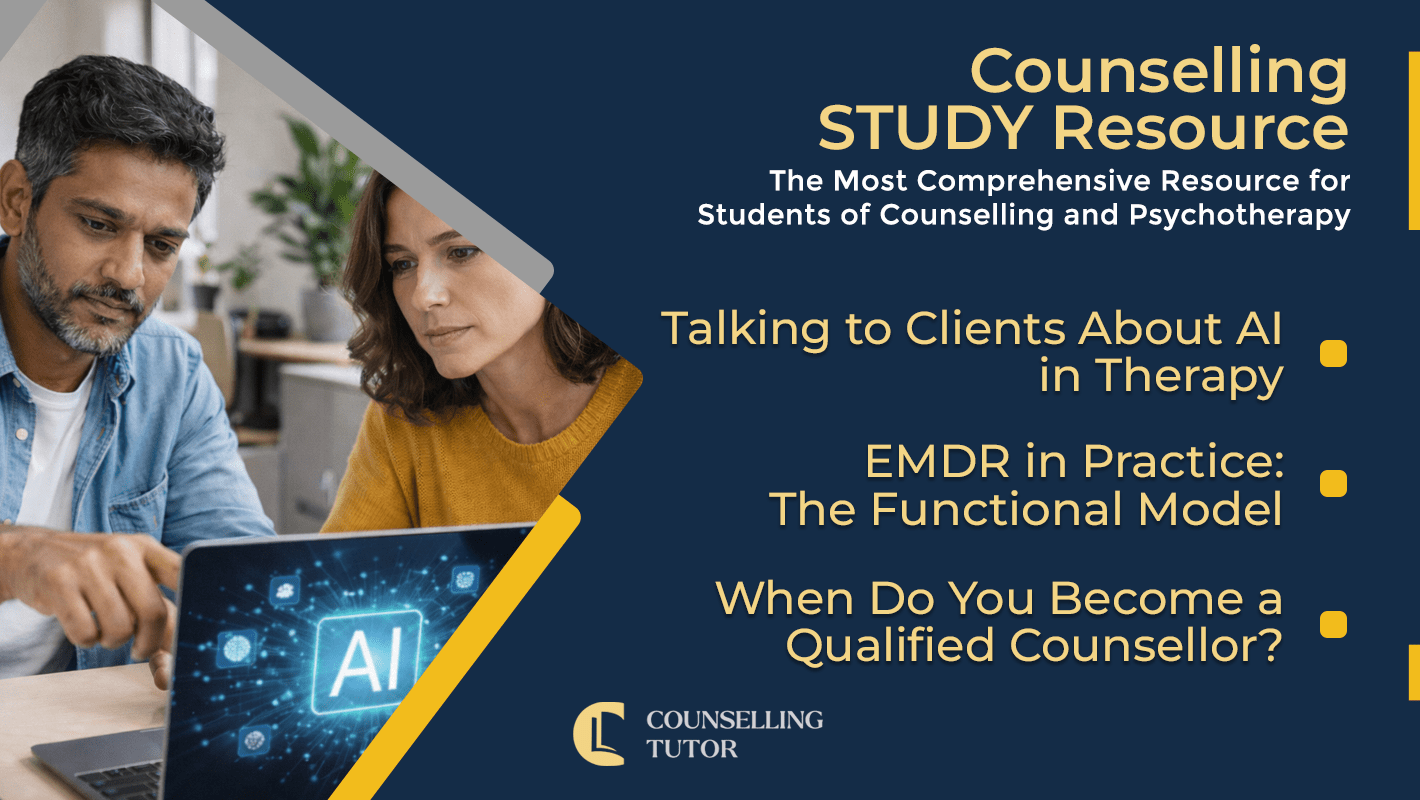
CT Podcast Ep367 featured image - Topics Discussed: Talking to Clients About AI in Therapy – EMDR in Practice: The Functional Model – When Do You Become a Qualified Counsellor?

EMDR in Practice: The Functional Model – When Do You Become a Qualified Counsellor?

subscribe_itunes button small

In Episode 367 of the Counselling Tutor Podcast, your hosts Rory Lees-Oakes and Ken Kelly explore three timely and important topics for counsellors, psychotherapists, and students.

Firstly, in Ethical, Sustainable Practice, Rory and Ken explore talking to clients about AI in therapy, discussing the growing presence of artificial intelligence (AI) in clients’ lives and why therapists need to address the risks, ethics, and boundaries of AI use within the therapeutic contract.

Then, in Practice Matters, Rory is joined by Andrew Kidd for the second part of their conversation on EMDR, focusing on the functional model and how EMDR works in practice to help clients reprocess trauma.

Finally, in Student Services, Rory and Ken unpack a common source of confusion for trainees: when you actually become qualified as a counsellor, and how this differs from accreditation and employability.

Download your free Handout: Talking to Clients About AI During Contracting

Talking to Clients About AI in Therapy [starts at 03:08 mins]

Rory and Ken explore talking to clients about AI in therapy, examining why counsellors need to understand and address clients’ use of AI and how to ethically integrate this into therapeutic practice.

Key points discussed include:

  • Many clients are already using AI tools (such as large language models) for emotional support and guidance, often without understanding the risks.
  • AI does not hold duty of care, ethical accountability, or safeguarding responsibilities, unlike a trained therapist.
  • Responses from AI can sound confident and empathic but may be inaccurate, inappropriate, or harmful.
  • Client data shared with AI tools may be stored, analysed, and used commercially, with no guarantee of confidentiality.
  • Including AI use within the therapy contract helps protect clients and supports ethical, defensible practice.

See Counselling Skills Used in Real Sessions by Qualified Therapist

Real Sessions – Real Presentations – Real Skills
Gain the competence and confidence to use counselling techniques effectively!

EMDR in Practice: The Functional Model [starts at 41:03 mins]

In this second interview, Andrew Kidd explains how EMDR works in the therapy room and how it helps the brain reprocess traumatic memories.

Key points from this conversation include:

  • Trauma is understood not as what happened, but as what happens inside the nervous system as a result of events.
  • EMDR works by activating the brain’s natural healing mechanisms through bilateral stimulation (eye movements, taps, or tones).
  • Bilateral stimulation helps clients stay grounded in the present while safely processing past memories.
  • Clients do not need to recount traumatic events in full detail for EMDR to be effective.
  • After reprocessing, memories often feel more distant and less emotionally charged, allowing clients to live more freely in the present.

Counselling Student Library

On-demand access to a rich lecture library covering theory, skills, and professional development for counselling students—Mapped to the UK awarding body criteria

“The Student Library has been BRILLIANT, I can’t recommend it enough!
It has been a lifeline in helping me prepare for practice and my first clients. If you’re considering it, go-for-it, it’s absolutely worth it!”
Kelly – Graduated and now in practice.

When Do You Become a Qualified Counsellor? [starts at 01:02:11 mins]

Rory and Ken clarify the difference between being qualified, accredited, and employable within the counselling profession.

Key points include:

  • Completing a recognised counselling diploma (with supervised practice) means you are technically a qualified counsellor.
  • Counselling is not a legally protected title in the UK and relies on voluntary regulation via professional bodies.
  • Many employers (such as the NHS and EAPs) now require accreditation, which comes after significant post-qualification practice hours.
  • Accreditation often involves additional competencies and assessments not covered in initial training.
  • Understanding this career pathway early can help students plan realistically and stay resilient in their professional journey.

Free Handout Download Talking to Clients About AI During Contracting

Counsellor CPD Library

Get on-demand Certified CPD that is implementable in your practice

  • Over 150 hours of on-demand CPD lectures to help you stay current with your CPD ethical requirements
  • Support, and be supported, by thousands of other counsellors as a member of the exclusive online community.
  • Access your learning anytime you want … anywhere you choose … using any device type — desktop or mobile.

£100 off the WebHealer.net “Do it for me” service

  • WebHealer are the go-to provider of websites for private practitioners in the UK.
  • Established over 20 years, WebHealer offers a non-technical and fully supported service to help therapists grow their private practice.
  • Just one customer from your website each year pays 
for their service.
Use coupon code CT100 Visit webhealer.net