Online and Telephone Counselling Course – Enrolment Open

361 – Managing Isolation in Counselling Practice

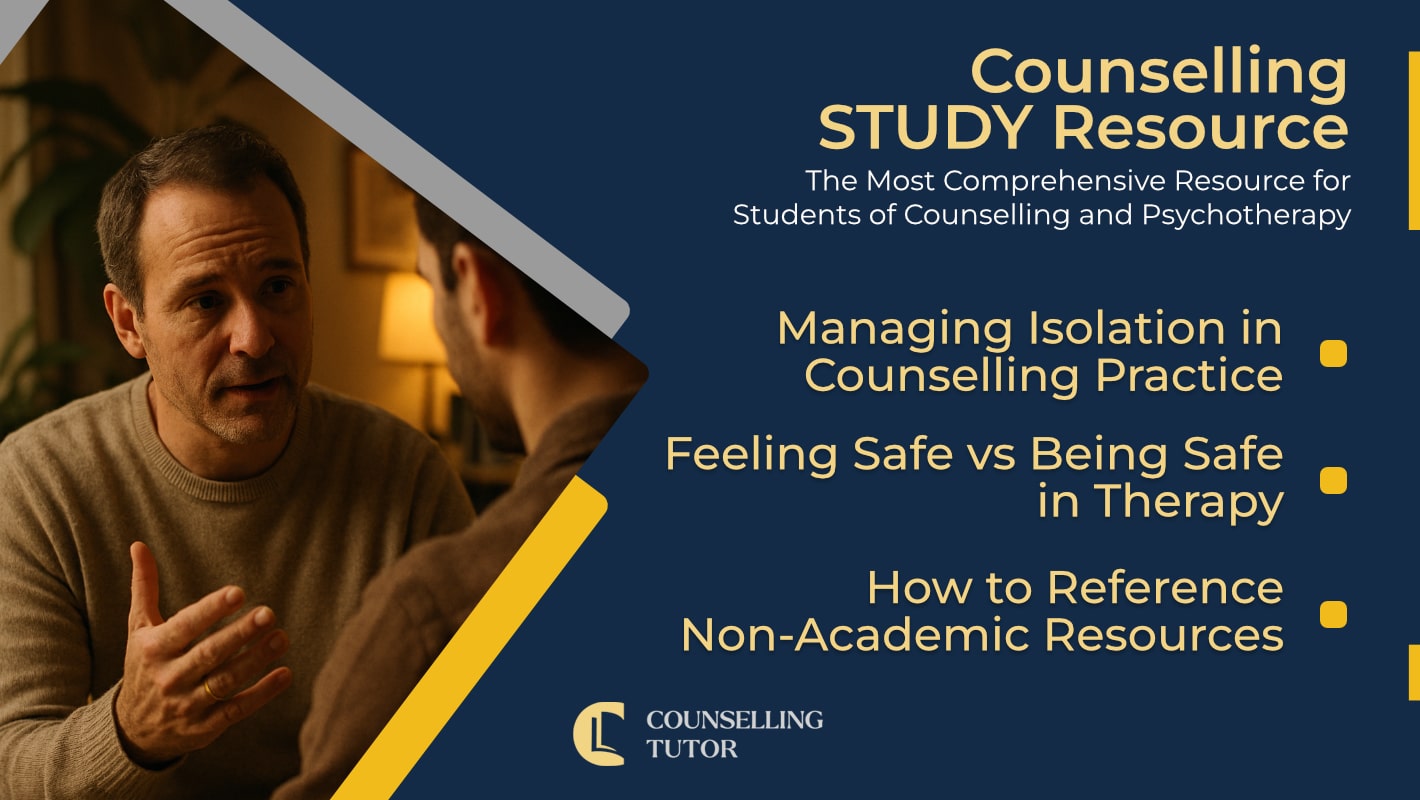
CT Podcast Ep361 featured image - Topics Discussed: Managing Isolation in Counselling Practice - Feeling Safe vs Being Safe in Therapy - How to Reference Non-Academic Resources

Feeling Safe vs Being Safe in Therapy – How to Reference Non-Academic Resources

subscribe_itunes button small

In Episode 361 of the Counselling Tutor Podcast, your hosts Rory Lees-Oakes and Ken Kelly explore three vital topics for students and practitioners of counselling and psychotherapy:

Firstly, in ‘Ethical, Sustainable Practice’, Rory and Ken examine managing isolation in counselling practice, highlighting why counsellors may experience isolation, the impact of emotional labour, and the importance of maintaining professional connections.

Then in ‘Practice Matters’, Rory speaks with psychotherapist Claire Ratcliffe about the subtle but essential distinction between feeling safe and being safe in therapy, and what this means for clients and therapeutic practice.

And finally, in ‘Student Services’, Rory and Ken offer practical guidance on how to reference non-academic resources in academic assignments.

Download your free Handout: Managing Isolation in Counselling Practice

Managing Isolation in Counselling Practice [starts at 03:29 mins]

Rory and Ken reflect on managing isolation in counselling practice, exploring the isolating nature of counselling work and how the emotional labour involved can take a toll if not proactively addressed.

  • Counsellors often work alone – especially in private or online practice – reducing professional interaction.
  • Confidentiality prevents therapists from sharing day-to-day experiences, contributing to feelings of disconnection.
  • Emotional labour builds up over time and, without an outlet, can lead to burnout or compassion fatigue.
  • Proactive self-care, social hobbies, and peer engagement are essential for maintaining emotional balance.
  • Supervision and CPD groups offer vital opportunities for connection and support.
  • Personal development through reflective practice helps therapists process isolation and stay grounded.

See Counselling Skills Used in Real Sessions by Qualified Therapist

Real Sessions – Real Presentations – Real Skills
Gain the competence and confidence to use counselling techniques effectively!

Feeling Safe vs Being Safe in Therapy [starts at 19:00 mins]

Claire Ratcliffe joins Rory to unpack the nuanced difference between being in a safe environment and actually feeling safe enough to engage in therapy.

  • A therapist may offer a structurally safe space, but clients may not feel safe due to past trauma or relational history.
  • Feeling safe is a nervous system response developed through consistent, attuned, and non-defensive relational experiences.
  • Transference may cause clients to project past harm onto the therapist – naming and exploring this supports healing.
  • Emotional safety allows clients to express discomfort or anger – a sign of growth and nervous system regulation.
  • Therapists must do their own reflective and supervision work to hold client projections non-defensively.
  • The therapeutic process itself may not always feel safe. Even with a safe therapist, clients need time to build tolerance to emotional vulnerability.

Counselling Student Library

On-demand access to a rich lecture library covering theory, skills, and professional development for counselling students—Mapped to the UK awarding body criteria

“The Student Library has been BRILLIANT, I can’t recommend it enough!
It has been a lifeline in helping me prepare for practice and my first clients. If you’re considering it, go-for-it, it’s absolutely worth it!”
Kelly – Graduated and now in practice.

How to Reference Non-Academic Resources [starts at 44:52 mins]

Ken and Rory explain how to correctly use and cite non-academic resources in counselling training assignments.

  • Academic work should be referenced using primary academic sources (e.g. Rogers, Freud), not interpretations by tutors or websites.
  • Resources like Counselling Tutor are useful for understanding theory but should not be cited as the original source.
  • Counselling Tutor provides full reference lists for its materials, supporting students in finding and citing academic texts.
  • There are exceptions: students can cite guest experts in CPD lectures, or books authored by Counselling Tutor.
  • A dedicated reference guide is available at https://counsellingtutor.com/reference/
  • Understanding referencing standards supports academic integrity and successful assignment writing.

Free Handout Download

Managing Isolation in Counselling Practice

Counsellor CPD Library

Get on-demand Certified CPD that is implementable in your practice

  • Over 150 hours of on-demand CPD lectures to help you stay current with your CPD ethical requirements
  • Support, and be supported, by thousands of other counsellors as a member of the exclusive online community.
  • Access your learning anytime you want … anywhere you choose … using any device type — desktop or mobile.

£100 off the WebHealer.net “Do it for me” service

  • WebHealer are the go-to provider of websites for private practitioners in the UK.
  • Established over 20 years, WebHealer offers a non-technical and fully supported service to help therapists grow their private practice.
  • Just one customer from your website each year pays 
for their service.
Use coupon code CT100 Visit webhealer.net