Online & Telephone Counselling Course – Enrolment Open

379 – Accountability and Responsibility in AI Counselling Practice

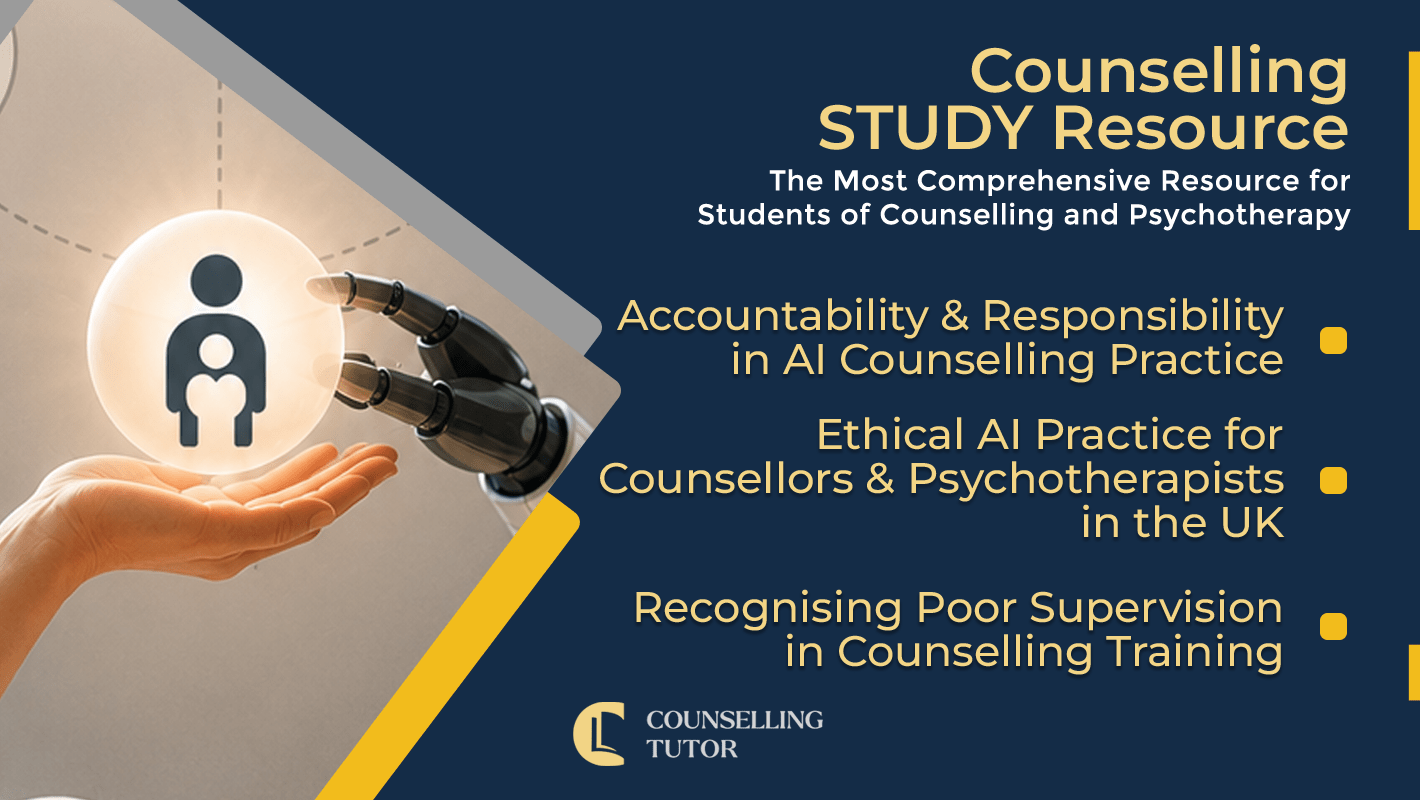
CT Podcast Ep379 featured image - Topics Discussed: Accountability and Responsibility in AI Counselling Practice - Ethical AI Practice for Counsellors and Psychotherapists in the UK - Recognising Poor Supervision in Counselling Training

Ethical AI Practice for Counsellors and Psychotherapists in the UK – Recognising Poor Supervision in Counselling Training

subscribe_itunes button small

In Episode 379 of the Counselling Tutor Podcast, your hosts Rory Lees-Oakes and Ken Kelly take us through this week’s three topics:

Firstly, in ‘Ethical, Sustainable Practice’, they explore professional accountability and responsibility in AI in counselling practice – including who holds responsibility if something goes wrong.

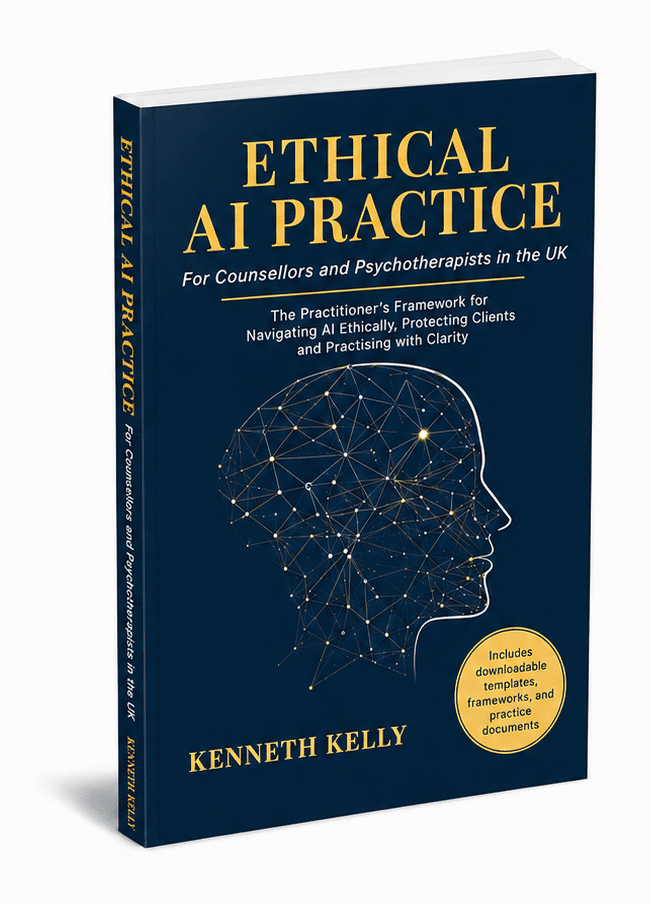
Then in ‘Practice Matters’, Rory speaks with Ken Kelly about his new book, Ethical AI Practice for Counsellors and Psychotherapists in the UK, and the growing role of AI in counselling and psychotherapy.

And finally, in ‘Student Services’, Rory and Ken discuss recognising poor supervision in counselling training – including red flags to look out for and what good supervision should provide.

Download your free Handout: Accountability and Responsibility in AI Counselling Practice

Accountability and Responsibility in AI Counselling Practice [starts at 03:10 mins]

In this section, Rory and Ken explore accountability and responsibility in AI counselling practice, examining the ethical and legal responsibilities counsellors hold when using AI tools in their work.

Key points discussed include:
  • The responsibility for clinical decisions always remains with the practitioner, even when using AI-supported tools.
  • Counsellors need to critically evaluate any digital tools they use, including understanding how client data is stored, protected, and accessed.
  • It’s important to consider what happens if a tool provider closes down or experiences a data breach.
  • Practitioners should check whether their insurance covers the use of AI-supported systems in clinical work.
  • Ethical decision-making includes documenting why a tool was accepted, rejected, or adopted with conditions.
  • Using anonymised or non-identifiable client information can add an extra layer of protection when working digitally.

See Counselling Skills Used in Real Sessions by Qualified Therapist

Real Sessions – Real Presentations – Real Skills
Gain the competence and confidence to use counselling techniques effectively!

Ethical AI Practice for Counsellors and Psychotherapists in the UK [starts at 26:58 mins]

In this week’s ‘Practice Matters’, Rory speaks with Ken Kelly about his new book, Ethical AI Practice, exploring the ethical use of AI in counselling and psychotherapy.

Key points from this conversation include:

  • Ken describes the moment he realised AI would significantly impact every profession, including counselling and psychotherapy.
  • The book was written to help practitioners navigate AI ethically while formal guidance from professional bodies continues to develop.
  • The AI Expert Reference Group brings together representatives from counselling organisations, training providers, and ethical bodies to discuss developments in AI.
  • The book focuses on applying existing counselling skills and ethical thinking to AI rather than teaching technical knowledge.
  • AI is already appearing in counselling practice through tools, apps, and client use – often without practitioners realising it.
  • Companion resources include ethical evaluation tools, AI policy templates, therapeutic contract examples, and downloadable workbooks.

Counselling Student Library

On-demand access to a rich lecture library covering theory, skills, and professional development for counselling students—Mapped to the UK awarding body criteria

“The Student Library has been BRILLIANT, I can’t recommend it enough!
It has been a lifeline in helping me prepare for practice and my first clients. If you’re considering it, go-for-it, it’s absolutely worth it!”
Kelly – Graduated and now in practice.

Recognising Poor Supervision in Counselling Training [starts at 01:07:52 mins]

In this section, Rory and Ken discuss how counselling students can recognise poor supervision and what healthy supervision should look like.

Key points include:

  • Students are paying for a professional service and should expect clear contracting, appropriate support, and professional boundaries.
  • A good supervisor should understand the needs of counselling students and ideally have experience supervising trainees.
  • Supervision should feel supportive and safe while still offering appropriate challenge and professional development.
  • Supervisors should understand the modality and context in which the student is working, including online or telephone practice where relevant.
  • Warning signs may include feeling unable to bring mistakes into supervision, blurred boundaries, or supervision sessions that lack depth and challenge.
  • Good supervision helps students grow in confidence, reflect critically on their practice, and develop professionally in service of their clients.

Free Handout Download Accountability and Responsibility in AI Counselling Practice

Counsellor CPD Library

Get on-demand Certified CPD that is implementable in your practice

  • Over 150 hours of on-demand CPD lectures to help you stay current with your CPD ethical requirements
  • Support, and be supported, by thousands of other counsellors as a member of the exclusive online community.
  • Access your learning anytime you want … anywhere you choose … using any device type — desktop or mobile.

£100 off the WebHealer.net “Do it for me” service

  • WebHealer are the go-to provider of websites for private practitioners in the UK.
  • Established over 20 years, WebHealer offers a non-technical and fully supported service to help therapists grow their private practice.
  • Just one customer from your website each year pays 
for their service.
Use coupon code CT100 Visit webhealer.net