Online & Telephone Counselling Course – Enrolment Open

374 – AI and the Therapeutic Relationship

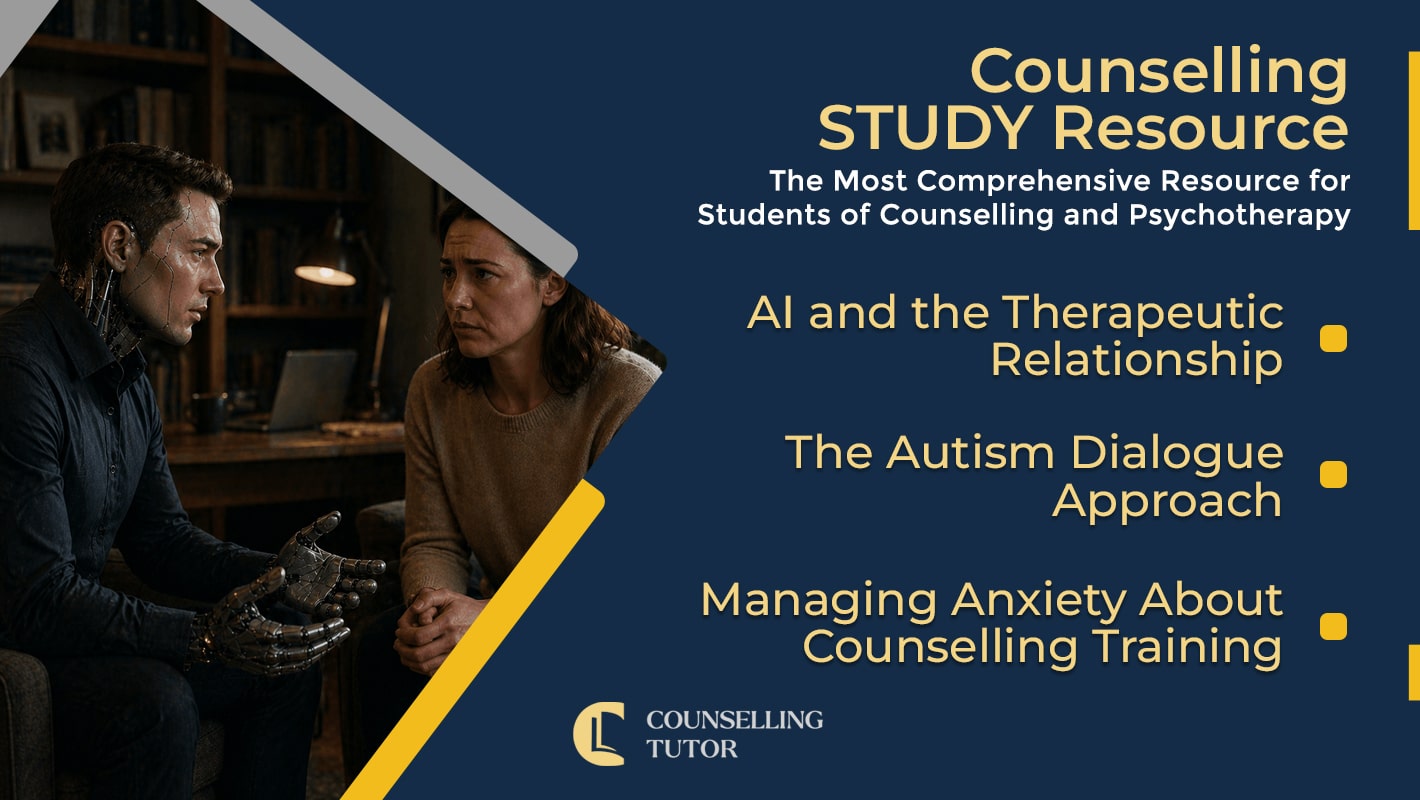
CT Podcast Ep374 featured image - Topics Discussed: AI and the Therapeutic Relationship - The Autism Dialogue Approach - Managing Anxiety About Counselling Training

The Autism Dialogue ApproachManaging Anxiety About Counselling Training

subscribe_itunes button small

In Episode 374 of the Counselling Tutor Podcast, your hosts Rory Lees-Oakes and Ken Kelly take us through this week’s three topics:

Firstly, in ‘Ethical, Sustainable Practice’, they explore AI and the therapeutic relationship – looking at how clients are using AI, the risks involved, and how therapists can respond ethically.

Then in ‘Practice Matters’, Rory speaks with Jonathan Drury about the Autism Dialogue Approach – examining neurodiversity, communication, and how therapists can work more collaboratively and equitably.

And finally, in ‘Student Services’, Rory and Ken discuss managing anxiety about counselling training – normalising the experience and offering strategies to navigate it.

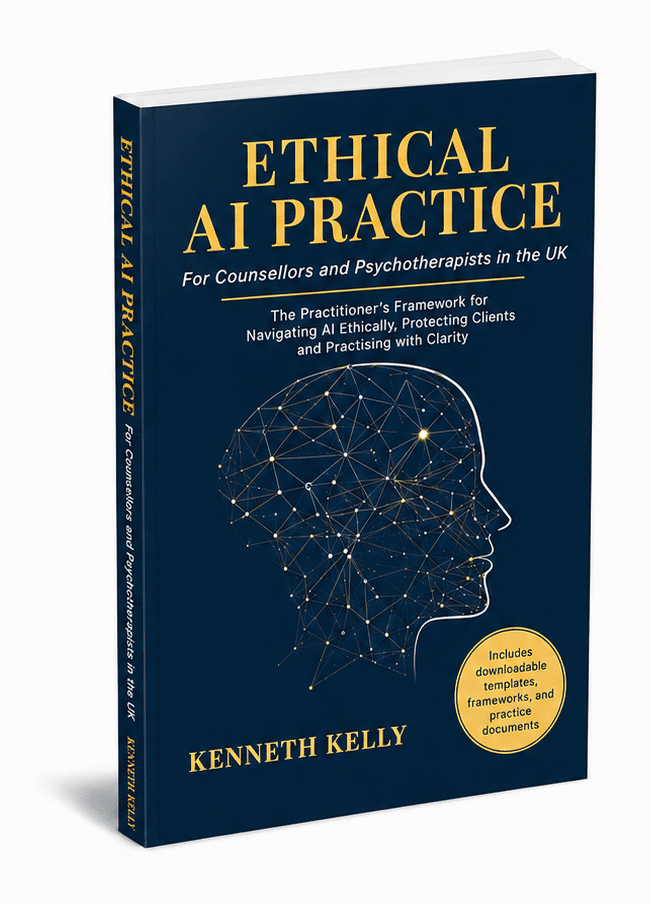
Download your free Handout: AI and the Therapeutic Relationship

AI and the Therapeutic Relationship [starts at 02:59 mins]

In this section, Rory and Ken explore AI and the therapeutic relationship, examining how the rise of AI is influencing therapeutic work and what this means for ethical practice.

Key points discussed include:
  • The therapeutic relationship is built on trust, empathy, and human connection – elements that AI cannot genuinely replicate.
  • Clients may disclose more quickly to AI due to its 24/7 availability and perceived anonymity, potentially leading to over-disclosure.
  • AI can provide inaccurate, biased, or harmful guidance, sometimes leading clients to self-diagnose incorrectly.
  • Confidentiality is not guaranteed with AI tools, raising serious ethical and data protection concerns.
  • Therapists should acknowledge AI use in their practice – consider including it in contracts and discussing it openly with clients.
  • Offering clients informed choice (rather than prohibition) supports autonomy while maintaining ethical responsibility.

See Counselling Skills Used in Real Sessions by Qualified Therapist

Real Sessions – Real Presentations – Real Skills
Gain the competence and confidence to use counselling techniques effectively!

The Autism Dialogue Approach [starts at 33:13 mins]

In this week’s ‘Practice Matters’, Rory speaks with Jonathan Drury about his Autism Dialogue Approach and how it supports neurodivergent communication.

Key points from this conversation include:

  • The Autism Dialogue Approach emphasises co-creation, where therapist and client work together on equal footing.
  • It challenges traditional power dynamics in therapy, promoting equity and shared meaning-making.
  • Moving away from a deficit-based view of autism towards recognising difference and autistic culture is essential.
  • Dialogue involves key practices such as listening, respect, suspension of judgment, and authentic voice.
  • Creating neurodivergence-affirming spaces includes adapting environments, communication styles, and expectations.
  • Societal structures often disadvantage autistic individuals, and dialogue can help challenge and reshape these systems.

Counselling Student Library

On-demand access to a rich lecture library covering theory, skills, and professional development for counselling students—Mapped to the UK awarding body criteria

“The Student Library has been BRILLIANT, I can’t recommend it enough!
It has been a lifeline in helping me prepare for practice and my first clients. If you’re considering it, go-for-it, it’s absolutely worth it!”
Kelly – Graduated and now in practice.

Managing Anxiety About Counselling Training [starts at 59:03 mins]

In this section, Rory and Ken discuss the common experience of anxiety in counselling training and how to manage it effectively.

Key points include:

  • Feeling anxious about starting or continuing a counselling course is completely normal and widely experienced.
  • Anxiety can arise at multiple stages: starting training, assessments, skills practice, or placement work.
  • Personal development groups offer a safe space to share and normalise these feelings with peers.
  • Journaling helps externalise anxiety, making it easier to understand and process.
  • Personal therapy and supervision provide additional support to explore anxiety in depth.
  • Holding onto your “why” for training can help you move through anxiety and stay motivated.

Free Handout Download AI and the Therapeutic Relationship

Counsellor CPD Library

Get on-demand Certified CPD that is implementable in your practice

  • Over 150 hours of on-demand CPD lectures to help you stay current with your CPD ethical requirements
  • Support, and be supported, by thousands of other counsellors as a member of the exclusive online community.
  • Access your learning anytime you want … anywhere you choose … using any device type — desktop or mobile.

£100 off the WebHealer.net “Do it for me” service

  • WebHealer are the go-to provider of websites for private practitioners in the UK.
  • Established over 20 years, WebHealer offers a non-technical and fully supported service to help therapists grow their private practice.
  • Just one customer from your website each year pays 
for their service.
Use coupon code CT100 Visit webhealer.net