Online & Telephone Counselling Course – Enrolment Open

376 – AI in Counselling Practice

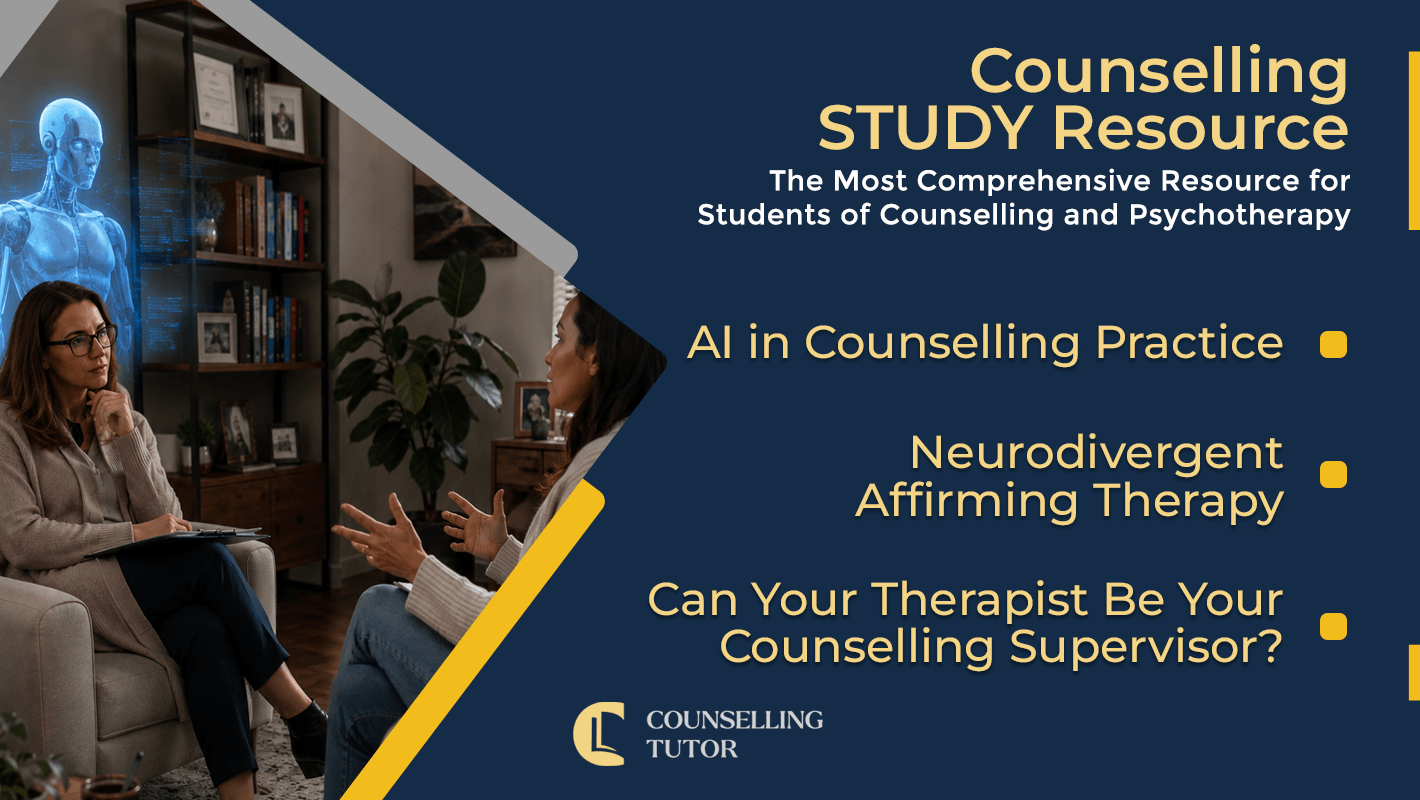
CT Podcast Ep376 featured image - Topics Discussed: AI in Counselling Practice - Neurodivergent Affirming Therapy - Can Your Therapist Be Your Counselling Supervisor?

Neurodivergent Affirming Therapy – Can Your Therapist Be Your Counselling Supervisor?

subscribe_itunes button small

In Episode 376 of the Counselling Tutor Podcast, your hosts Rory Lees-Oakes and Ken Kelly take us through this week’s three topics:

Firstly, in ‘Ethical, Sustainable Practice’, they explore AI in counselling practice, focusing on understanding informed consent and data use.

Then in ‘Practice Matters’, Rory speaks with Amy Peters about neurodivergent affirming therapy and her new book on working with autistic and ADHD clients.

And finally, in ‘Student Services’, Rory, Ken and Paul Cullen discuss whether your therapist can also be your counselling supervisor, exploring the ethical and practical considerations.

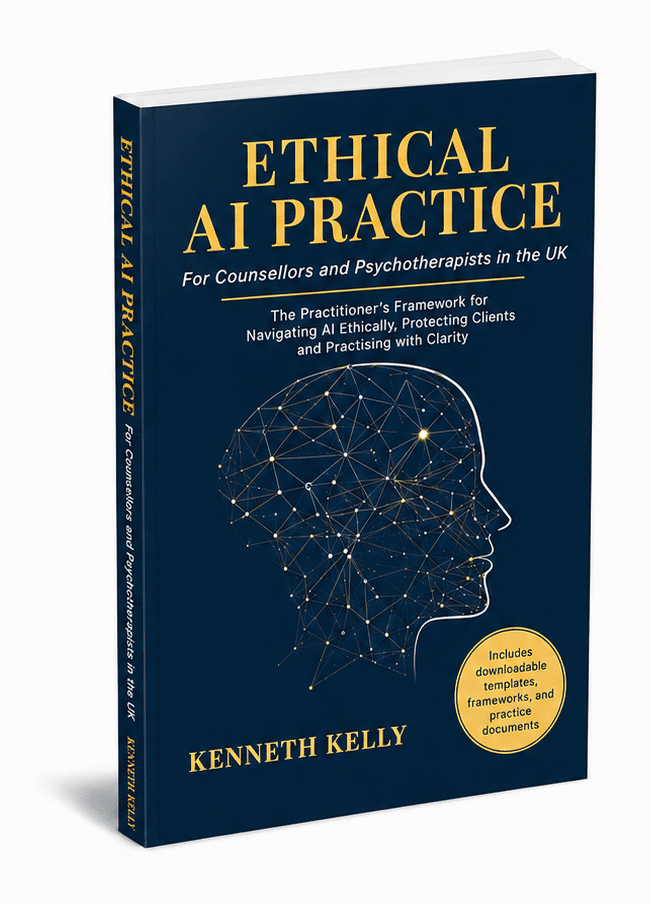
Download your free Handout: AI in Counselling Practice

AI in Counselling Practice [starts at 03:11 mins]

In this section, Rory and Ken explore AI in counselling practice, examining what informed consent really means in the context of AI and data protection.

Key points discussed include:
  • Informed consent goes beyond a simple agreement – clients must fully understand how their data is collected, stored, used, and shared.
  • Therapists must be able to explain tools (including AI and apps) in clear, simple language that clients can genuinely understand.
  • Data protection applies from the very first contact (e.g. website forms, emails), not just during therapy sessions.
  • Clients must have control over their data, including the ability to withdraw consent and request deletion.
  • Using third-party tools (e.g. note-taking apps or video platforms) requires explicit informed consent from clients.
  • Consent is an ongoing process that should be revisited throughout the therapeutic relationship, not a one-time event.

See Counselling Skills Used in Real Sessions by Qualified Therapist

Real Sessions – Real Presentations – Real Skills
Gain the competence and confidence to use counselling techniques effectively!

Neurodivergent Affirming Therapy [starts at 28:35 mins]

In this week’s ‘Practice Matters’, Rory speaks with Amy Peters about her book Neurodivergent Affirming Therapy: Rethinking Approaches for Autistic and ADHD Clients.

Key points from this conversation include:

  • Traditional therapy models are often rooted in neuronormative assumptions, which may not meet the needs of neurodivergent clients.
  • Neurodivergent affirming practice shifts from a deficit-based view to recognising neurodivergence as a valid form of human diversity.
  • Common behaviours (e.g. stimming, lack of eye contact, shutdowns) can be misinterpreted and pathologised in traditional models.
  • Therapists may unintentionally reinforce masking or neurotypical expectations without awareness.
  • There are persistent myths, such as autistic people lacking empathy, which can negatively impact therapeutic relationships.
  • Increased diagnoses reflect historical underdiagnosis, especially among women and marginalised groups, rather than overdiagnosis.

Counselling Student Library

On-demand access to a rich lecture library covering theory, skills, and professional development for counselling students—Mapped to the UK awarding body criteria

“The Student Library has been BRILLIANT, I can’t recommend it enough!
It has been a lifeline in helping me prepare for practice and my first clients. If you’re considering it, go-for-it, it’s absolutely worth it!”
Kelly – Graduated and now in practice.

Can Your Therapist Be Your Counselling Supervisor? [starts at 50:11 mins]

In this section, Rory, Ken and Paul Cullen explore whether it is appropriate for a therapist to also take on the role of supervisor.

Key points include:

  • Dual relationships (therapist and supervisor) can create ethical and professional conflicts and are generally discouraged.
  • Therapy and supervision serve different purposes – therapy focuses on the client’s personal process, while supervision focuses on client work and professional practice.
  • Prior therapeutic relationships may influence or complicate the supervisory dynamic.
  • Ethical bodies offer varying guidance, but all highlight the need to carefully consider risks and boundaries.
  • Supervision includes formative, normative, and restorative functions, which differ from therapeutic work.
  • Where possible, it is advisable to seek a separate supervisor to maintain clarity and professional integrity.

Free Handout Download AI in Counselling Practice

Counsellor CPD Library

Get on-demand Certified CPD that is implementable in your practice

  • Over 150 hours of on-demand CPD lectures to help you stay current with your CPD ethical requirements
  • Support, and be supported, by thousands of other counsellors as a member of the exclusive online community.
  • Access your learning anytime you want … anywhere you choose … using any device type — desktop or mobile.

£100 off the WebHealer.net “Do it for me” service

  • WebHealer are the go-to provider of websites for private practitioners in the UK.
  • Established over 20 years, WebHealer offers a non-technical and fully supported service to help therapists grow their private practice.
  • Just one customer from your website each year pays 
for their service.
Use coupon code CT100 Visit webhealer.net